Locations
Resource Links




As technology becomes more accessible, there are tons of products and services designed to help people engage in activities that matter to them. Assistive technology is basically any item or system that helps people with disabilities do what they want to do, whether bought off the shelf, modified, or custom-built.
Examples are everywhere, but some you may not have considered:
These are just a few examples from thousands of available solutions.
Occupational therapy sits right in the middle of all this. Our education and scope of practice put us in a unique position to recommend, teach, and implement these technologies in our clients' lives. We understand both the person and the activity in ways that others often miss.
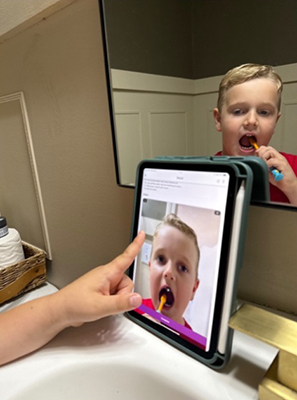
Working with children and teens with autism, I was constantly hunting for and recommending assistive technology solutions. I found amazing tools that I could implement immediately. But I kept hitting the same wall with traditional hygiene interventions, such as visual schedules, video modeling, and parent training, which weren't quite hitting the mark for full independence for my client’s needs.
That gap led me to create Hygiene Hippie, an app that facilitates independence in complete hygiene routines through an accessible mobile platform. I combined my OT education with my expertise in this specific population to build something that didn't exist before.
That's what makes occupational therapy different. We truly understand our clients' day-to-day realities. We know their physical and cognitive skills, how those skills impact their participation in meaningful activities, and why that participation matters for quality of life.
With that foundation, we're not only recommending unique solutions. We can create entirely new ones that genuinely change lives.
Occupational Therapy Academic Fieldwork Coordinator
Assistant Professor
Discover the voices of Marian University's health professions students through "Franc Notes", a vibrant, student-led blog that embodies our Franciscan commitment to community, reflection, and compassionate service. Inspired by the rhythm of "SOAP notes," it features weekly insights—from "DO Diaries" interviews with physicians to summer reflections and program spotlights—fostering collaboration across disciplines.