Locations
Resource Links



One of the leading preventable causes of death after a traumatic injury is bleeding. Early intervention and bleeding control following an injury is critical, as uncontrolled hemorrhage can be fatal in as few as five minutes (Jones et al., 2023). Bystanders' actions can determine whether someone survives a traumatic injury. Despite this, there is a gap in public training of bleeding control, one that medical students could help close.
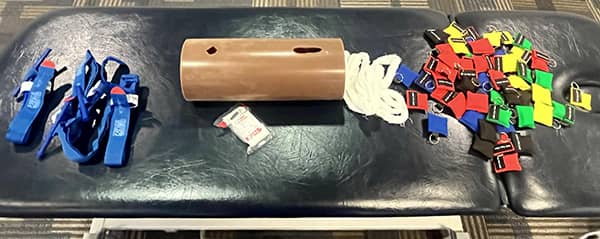 After the Sandy Hook Elementary School shooting, the American College of Surgeons launched the Stop the Bleed Campaign to educate the public on how to manage life-threatening bleeding until medical assistance arrives. There are three components in the program: using a tourniquet, wound packing, and applying direct pressure (Stop the Bleed, 2025). It takes less than an hour to learn these skills, yet few people are certified in this program.
A lack of public training in bleeding control can be deadly, with 25% of deaths related to uncontrolled hemorrhage being avoidable with proper control (Jones et al., 2023). Yet, despite this risk, bleeding control training is not the norm. Fewer than 2.5 million people in the U.S. have ever completed a Stop the Bleed course, compared with roughly 22 million Americans receiving a CPR certification each year (Jones et al., 2023).
This disparity leaves a critical gap in public preparedness. Traumatic bleeding often occurs in everyday settings, and the first minutes are crucial for survival. Without trained bystanders, victims may not receive timely interventions, even though the simple techniques taught in Stop the Bleed could save lives. Expanding access to this training is essential to reduce preventable deaths and strengthen community readiness.
Medical students are uniquely positioned to help address the bleeding control training gap. With their growing clinical knowledge, access to university and community networks, and role as future healthcare professionals, students can effectively teach Stop the Bleed courses to a wide audience. A study of over 400 medical students published in the Journal of Surgical Education found that students are effective as instructors, and there is a benefit of involving them in teaching prehospital hemorrhage control to the public. The study demonstrated that medical students could effectively teach all Stop the Bleed techniques even without prior instructor experience (Schroll et al., 2019).
By becoming certified instructors through the American College of Surgeons, medical students can lead community workshops, train peers, and host sessions for schools, workplaces, or other local organizations. Student-led initiatives not only expand public access to these lifesaving skills but also provide valuable teaching experience and reinforce students’ own clinical understanding. Engaging in Stop the Bleed instruction allows medical students to make a measurable impact on community health while developing skills that translate directly to their future roles as physicians.
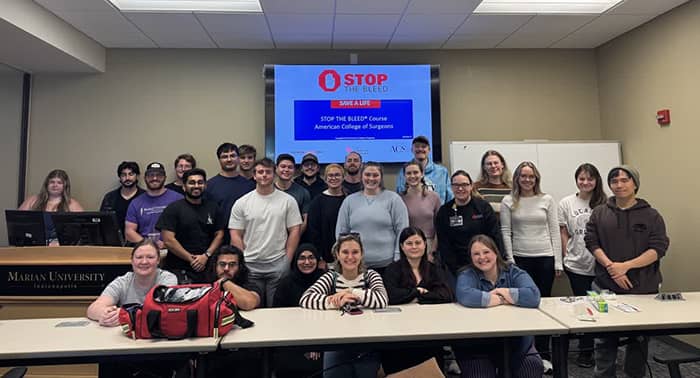
Last May, I was certified by another medical student and became a Stop the Bleed instructor. Since then, I have certified over 150 people, including my classmates at the Marian University Wood College of Osteopathic Medicine (MU-WCOM), local high school students, my co-workers at a local Girl Scout camp, and even my friends and family. Leading these sessions has been rewarding, providing an easy way to give back to my community while helping to address a critical gap in public preparedness.
While teaching, I notice that people tend to begin these sessions with no previous experience, yet they quickly gain confidence in their skills and soon find it simple. Seeing the difference in confidence and skill level reinforces that medical students can have a significant impact on improving community safety. I hope other medical students will take the time to become certified instructors to help close this training gap in their communities and strengthen their own clinical and teaching skills.
Jones, A. R., Miller, J., & Brown, M. (2023). Epidemiology of Trauma-Related Hemorrhage and Time to Definitive Care Across North America: Making the Case for Bleeding Control Education. Prehospital and disaster medicine, 38(6), 780–783. https://doi.org/10.1017/S1049023X23006428
Schroll, R., Smith, A., Zeoli, T., Hoof, M., Greiffenstein, P., Moore, M., McGrew, P., Duchesne, J., & Avegno, J. (2019). Efficacy of Medical Students as Stop the Bleed Participants and Instructors. Journal of Surgical Education, 76(4), 975-981. https://doi.org/10.1016/j.jsurg.2019.02.006
History. ACS Stop the Bleed. (n.d.). https://www.stopthebleed.org/about/history/
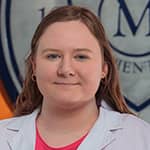 Sophia Siminow, OMS-2, is a second-year medical student at Marian University Wood College of Osteopathic Medicine. She is from Vienna, Virginia, and is a Saint Louis University alumna. She is a former EMT and plans to pursue emergency medicine. In her free time, she enjoys reading, watching ice hockey, and spending time with her fiancé, Alex.
Discover the voices of Marian University's health professions students through "Franc Notes", a vibrant, student-led blog that embodies our Franciscan commitment to community, reflection, and compassionate service. Inspired by the rhythm of "SOAP notes," it features weekly insights—from "DO Diaries" interviews with physicians to summer reflections and program spotlights—fostering collaboration across disciplines."