Locations
Resource Links


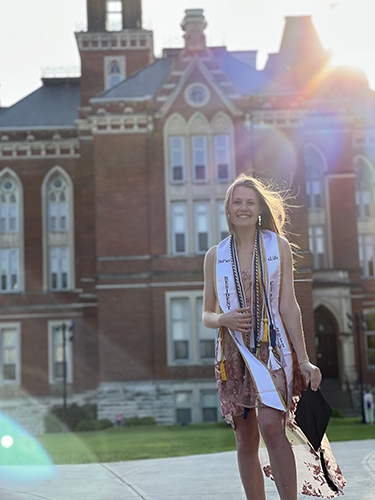 For Nika, the dream of becoming a doctor did not begin in a hospital—it began in her living room. Her aspiration was sparked by a television show. As a young girl watching a forensic pathologist solve crimes, she became fascinated by the idea of understanding the human body to uncover answers. The intersection of science and anatomy became something she wanted to pursue in the future. At the time, this dream felt distant, but as the years passed, her curiosity slowly transformed into something far deeper.
“I originally wanted to be a forensic pathologist,” she recalls. “But once I started taking science classes, I realized I just loved learning about how the body works.”
Still, it wasn’t until high school that medicine became personal.
During high school, Nika was hospitalized with a hip infection, where she gained a different perspective on healthcare. This time, she was a patient and that moment reshaped everything. It revealed another side of medicine: compassion and trust all while feeling vulnerable. “It stopped being just about science,” she explains. “It became about helping people on the worst days of their lives.” That realization would stay with her for years.
While volunteering at an emergency room during college, Nika witnessed the full spectrum of human experience. Some nights were chaotic and unpredictable, where others were ordinary. One evening changed how she understood her future role in medicine, however.
While walking through the hospital lobby searching for a lost phone, she noticed a young woman crying uncontrollably. Nika approached her and asked if she needed help. The woman was trying to find the emergency room. As they walked together, the woman revealed she had just swallowed two bottles of pain medication in an attempt to end her life. Nika stayed with her through the intake process before the medical team took over. However, she never saw the patient again.
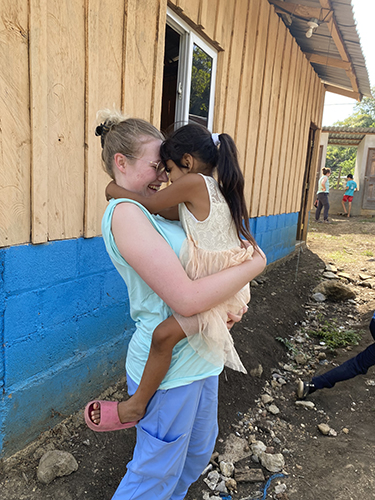
“I remember thinking I wish I could have done more,” she says. “I wanted to know if she was okay.”
This evening didn’t discourage her but strengthened her resolve. It reminded her why she wanted to become a physician in the first place: not just to understand illness, but to stand beside people during the moments when they feel most alone.
Unfortunately, Nika’s path to medical school was much harder than any other students’ as a student on visa. She arrived in the United States in the fall of 2018 to begin her undergraduate education. Like many international students, she quickly realized that pursuing medicine in the U.S. meant navigating a system that was not built with her in mind.
“The biggest challenge,” she explains, “is that many medical schools don’t even consider international students.”
Out of the approximately 200 medical schools, less than 50 accept international students. This drastically reduces the number of schools she could apply to. Many of the ones that do accept international applicants are highly competitive institutions with extremely high academic expectations. Research opportunities, internships, and scholarships are often limited to U.S. citizens or permanent residents, too. Financial aid options are significantly restricted as well, since international students are not eligible for federal student loans. Even admissions committees sometimes hesitate.
“They worry about whether international students will be able to afford medical school,” Nika explains.
Because of this, she often felt that meeting expectations wasn’t enough.
“I felt like I had to outperform everyone else just to have a chance.”
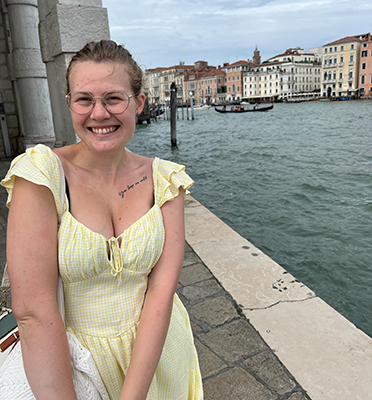
Nika’s road to medical school was nothing like a straight line. Like many aspiring doctors, she faced rejection. When she first applied, she didn’t get in. For an international student, that same moment may feel like a dead end. Even some of her friends who were following the same path ended up moving to a different career.
But Nika wasn’t ready to quit. She decided to take a two-year gap and worked in the pharmaceutical industry using her biochemistry degree, testing new opportunities to see if they made her happy. As expected, she got her answer pretty quickly. “The more I worked, the more I realized I had never wanted to be anything other than a doctor,” she says. She retook the MCAT, strengthened her application, and decided to apply again. This time, she actually succeeded, and in retrospect, she believes persistence made the difference. “I don’t think I stood out because I was perfect,” she says. “I stood out because I tried again.”
Nika’s background has changed how she thinks about healthcare. During the pandemic, she went back to Slovenia and worked in a hospital screening checkpoint, helping manage the continuous flood of patients. This experience showed her the importance of teamwork and community support when a healthcare system is under so much pressure. “Everyone was pitching in wherever they could,” she remembers. “Even the smallest tasks mattered.”
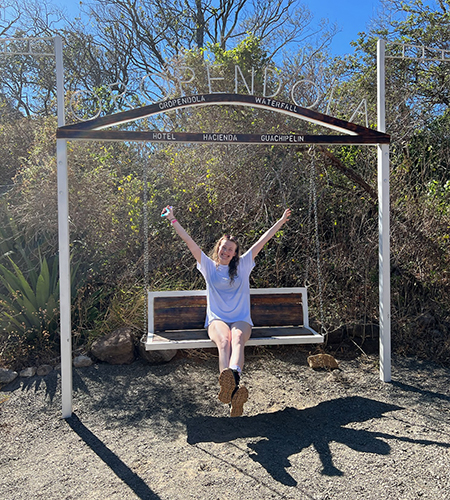 Even though Nika is still in her early training—a second-year osteopathic medical student at the Marian University Wood College of Osteopathic Medicine—she already has a clear idea of the type of doctor she wants to become. She’s currently interested in psychiatry, neurology, and emergency medicine, fields that mix science with lots of human connection. Rather than a specific specialty, she’s focused on how she treats her patients. “I want to be the type of physician who listens,” she says. It is not very rare that some patients feel like they aren't being heard. Nika wants to change that. “I want my patients to know that their experiences matter and that someone is advocating for them.”
After getting into medical school, international students still deal with a lot of uncertainty, especially with residency and visas. But Nika decided to stay optimistic. She expects to have the same residency opportunities as her classmates once she graduates with her U.S. medical degree, even if the visa process stays complicated.
Now she is focusing on why she started this in the first place, wanting to help people when they need it the most. She went from being fascinated by forensic science as a kid to volunteering in ERs and dealing with immigration barriers. Through every setback, her goal has stayed the same. She wants to be a doctor who stands by her patients during their lowest moments, making sure they don’t face it alone.
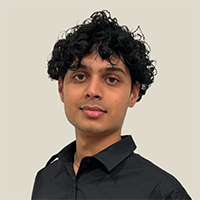
Shreyas Bulusu, is a Saint Luke Scholar freshman at Marian University. He is pursuing a double major in biology and mathematics under the pre-med track, as well as pursuing a master’s in biomedical sciences. It’s his dream to become a physician, and he is passionate about conducting research in medical imaging or computational cardiovascular science. He also enjoys playing soccer and badminton, or hanging out with friends.
 Gabriel Mendez, a freshman at Marian University, is pursuing a major in biology and a minor in computer science. His goal is to have a career as a bioinformatician, where he aims to analyze and interpret large-scale biological data, such as DNA sequences and protein structures. He also loves nature and has his own garden where he plants fruits and vegetables.
Discover the voices of Marian University's health professions students through "Franc Notes", a vibrant, student-led blog that embodies our Franciscan commitment to community, reflection, and compassionate service. Inspired by the rhythm of "SOAP notes," it features weekly insights—from "DO Diaries" interviews with physicians to summer reflections and program spotlights—fostering collaboration across disciplines."