Locations
Resource Links


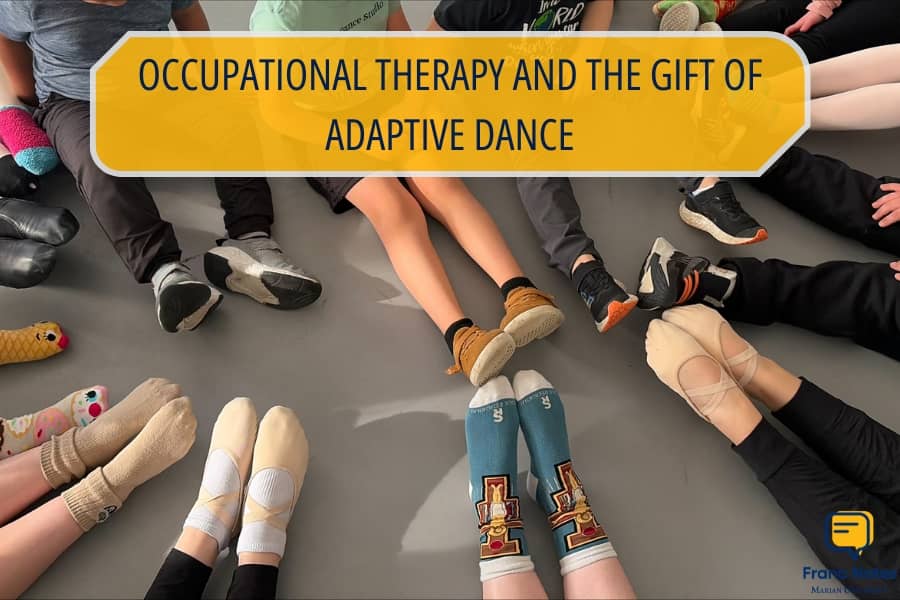
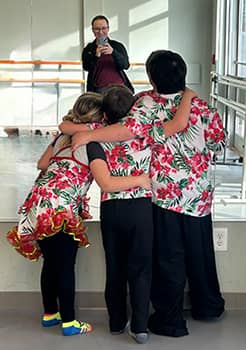
As the curtain lifted, I stood backstage, watching five children with Down syndrome make their way to center stage. Dressed in Hawaiian print and carrying large sand buckets, the kids performed their recital dance entitled “Calypso.” Listening to them receive considerable applause, I couldn’t help but be filled with pride. Their many hours of practice, as well as my many conversations reminding them that the sand buckets were props, not hats, had paid off.
 I never set out to create an adaptive dance program; I simply stumbled into it. I grew up taking dance classes at a studio on the northwest side of Indianapolis, and after finishing my Master of Occupational Therapy degree, I returned home to Indianapolis to start my career as an occupational therapist (OT). As a pediatric OT working in a public school system, I spent all day working with children with a variety of disabilities. Occasionally, while on school breaks, I would visit my old dance studio and take adult classes. The names of various dance students would pop up, many of whom I recognized from my work at the local schools. I learned that some of my students with disabilities had previously taken dance classes at the studio but eventually had to stop when they couldn’t keep up with the pace of the class or when there wasn’t enough assistance available to support them. What started out as a casual idea quickly turned into our first summer session—six weeks of adaptive dance classes. What ensued might be best described as a trial by fire, but by the end of the summer, I had combined my background as an OT with my dance experience to structure an adaptive dance class. I also attended an intensive adaptive dance training program through the Boston Ballet School, and our studio has been offering adaptive dance classes ever since. We are now wrapping up our third year, and I couldn’t be prouder of the program’s growth.
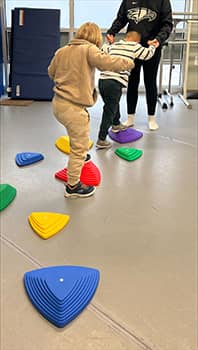
In occupational therapy practice, the term “occupation” is understood as purposeful, meaningful engagement in daily life activities. There are many areas of occupation, including leisure. For many individuals, participation in dance classes and performances is an important leisure occupation. Although it is a leisure activity, dance is also a demanding activity that requires many physical skills, including gross motor coordination, balance, body awareness, and spatial awareness. It also requires executive function skills, including sequencing, initiating, and attending to tasks for an extended time. From a sensory processing perspective, some individuals may be bothered by tight clothing, bright lights, and loud music. All of these skills necessary for participation in dance can be impacted by disabilities, whether physical, intellectual, or developmental.
At the dance studio, I work alongside amazing dance educators with strong backgrounds in dance performance and pedagogy. As an occupational therapist, I bring my expertise in activity analysis to dance class, helping to modify classes, performances, and classroom strategies to better support our dancers with unique needs. Some examples of these adaptations include using a highly structured routine, providing instructions verbally and in sign language, modifying the environment by decreasing the lights and music volume, and even providing the physical assistance required for a child in a wheelchair to participate in tumbling on a mat.
At Marian University, our Catholic, Franciscan tradition calls us to care for and serve others through a deep love for all of God’s creation. Occupational therapy, a person-centered practice, reflects the Franciscan values of peace and justice and the dignity of the individual. Occupational therapy can extend beyond the classroom or clinic to have a significant impact on the community. Facilitating adaptive dance classes allows children who otherwise might not have access to that leisure activity to make friends, participate in exercise, perform for family and friends, and engage in a meaningful occupation. During recitals, annual Nutcracker performances, and events, my adaptive dance students are given equal opportunities to be included at the dance studio. When all individual members of a community are given the opportunity to flourish, the community flourishes. Personally, my work as an adaptive dance teacher represents not just my profession as an OT, but my vocational calling to serve others, to create inclusive environments, and to use my knowledge and expertise to positively impact the world around me.
As we prepare to open occupational therapy programs at Marian University, I encourage future students to consider the ways that OTs are uniquely positioned to lead community-based adaptive arts programs. Students who pursue a Doctor of Occupational Therapy (OTD) degree might capitalize on the opportunity to design and implement adaptive dance programming during their 14-week doctoral capstone experience. Undergraduate students at Marian University who are pursuing Pre-Occupational Therapy and Pre-Physical Therapy tracks have volunteered at my adaptive dance classes, providing essential support to my dancers and offering students a great opportunity for career exploration. Moving forward, I hope to continue to expand access to adaptive dance classes for medically underserved communities as well as adults with intellectual and developmental disabilities.
As I reflect on the growth of my adaptive dance program, I recall a mantra I adopted early on: “Performing onstage is not the metric of success for this program.” Over the years, I have watched my students’ families grow closer during their hours sitting in the dance studio lobby, and I have seen my students make strong friendships, improve motor and coordination skills, and, most importantly, have a lot of fun in dance class. Getting on the stage isn’t what matters most, but it sure is fun to watch them perform. As an audience member, you just can’t help but smile!
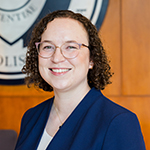 Laura Nolan, EdD, OTR, BCP, CAS, serves as Doctoral Capstone Professor and Clinical Assistant Professor in the graduate occupational therapy programs at Marian University. With a clinical background in school-based occupational therapy, she holds a Board Certification in Pediatrics and is interested in facilitating adaptive recreation opportunities for individuals with disabilities.
Discover the voices of Marian University's health professions students through "Franc Notes", a vibrant, student-led blog that embodies our Franciscan commitment to community, reflection, and compassionate service. Inspired by the rhythm of "SOAP notes," it features weekly insights—from "DO Diaries" interviews with physicians to summer reflections and program spotlights—fostering collaboration across disciplines."