Building Authentic Relationships: Peer Mentorship and Sensory-Friendly Experiences at Marian University
Building Authentic Relationships: Peer Mentorship and Sensory-Friendly Experiences at Marian University
By: |
Published: November 04, 2026
| Categories:
Neurodiversity,
Student Experience
College is full of invitations to connect.
A residence hall door left open. A student organization meeting. A football tailgate. Someone asking, “Want to come with us?”
For many autistic and neurodivergent students, the desire for connection can be very real. But wanting to participate and being able to comfortably enter the environment where connection happens are not always the same thing.
A crowded room, unfamiliar social expectations, amplified sound, bright lights, or simply not knowing where to stand can consume so much mental energy that there is very little left for the actual conversation.
That is why building authentic relationships on a college campus sometimes begins before two people ever meet.
It begins with making connection easier to enter.
Belonging Is More Than Being in the Room
Universities often measure student engagement by participation. Did the student attend the event? Join the organization? Go to the game?
Those are useful questions. They are not the whole story.
A student can be physically present at an event and spend the entire experience managing sensory overload or trying to determine what they are supposed to do next.
Belonging begins when a student has enough comfort and capacity left to notice another person, share an interest, laugh at something, ask a question, or decide to come back.
The goal should not be to make neurodivergent students more social according to someone else’s definition.
The goal is to create realistic opportunities for relationships to develop.
Peer Mentorship Can Make a Campus Feel Smaller
Spectrum of Knights (SOK) pairs each participating student with a Marian University peer mentor who is not part of SOK.
That distinction matters.
The mentor is not there to create a separate social world for the student. The mentor can become a bridge into the wider Marian community.
Sometimes connection starts with one familiar person.
A peer mentor can introduce a student to campus spaces, events, student organizations, and people they may not otherwise encounter. They can attend an activity together, answer the small questions that sometimes feel awkward to ask, and offer another perspective when a social situation is difficult to read.
There is a meaningful difference between walking alone into a crowded student event and arriving with one person you already know.
The event has not changed.
The entry point has.
Over time, those introductions can create something peer mentorship cannot manufacture directly: genuine relationships based on shared interests, repeated experiences, and familiarity.
A mentor should not become the student’s entire social network.
A good mentorship helps expand it.
Sensory-Friendly Does Not Mean Separate
Sensory-friendly programming can sometimes be misunderstood as creating a quieter version of college life somewhere away from everyone else.
That misses the point.
For some autistic students, sound, lighting, crowds, movement, smells, and unpredictable environments can create real cognitive and physical strain. If most of a student’s energy is being used to tolerate the setting, participation becomes harder.
Reducing unnecessary sensory load can make more participation possible, not less.
At Marian, the Spectrum of Knights Autism Coordinator works with campus staff when planning events to consider ways they can be more sensory-friendly. At a large campus gathering, that might include a quiet zone where a student can step away, regulate, and return when ready.
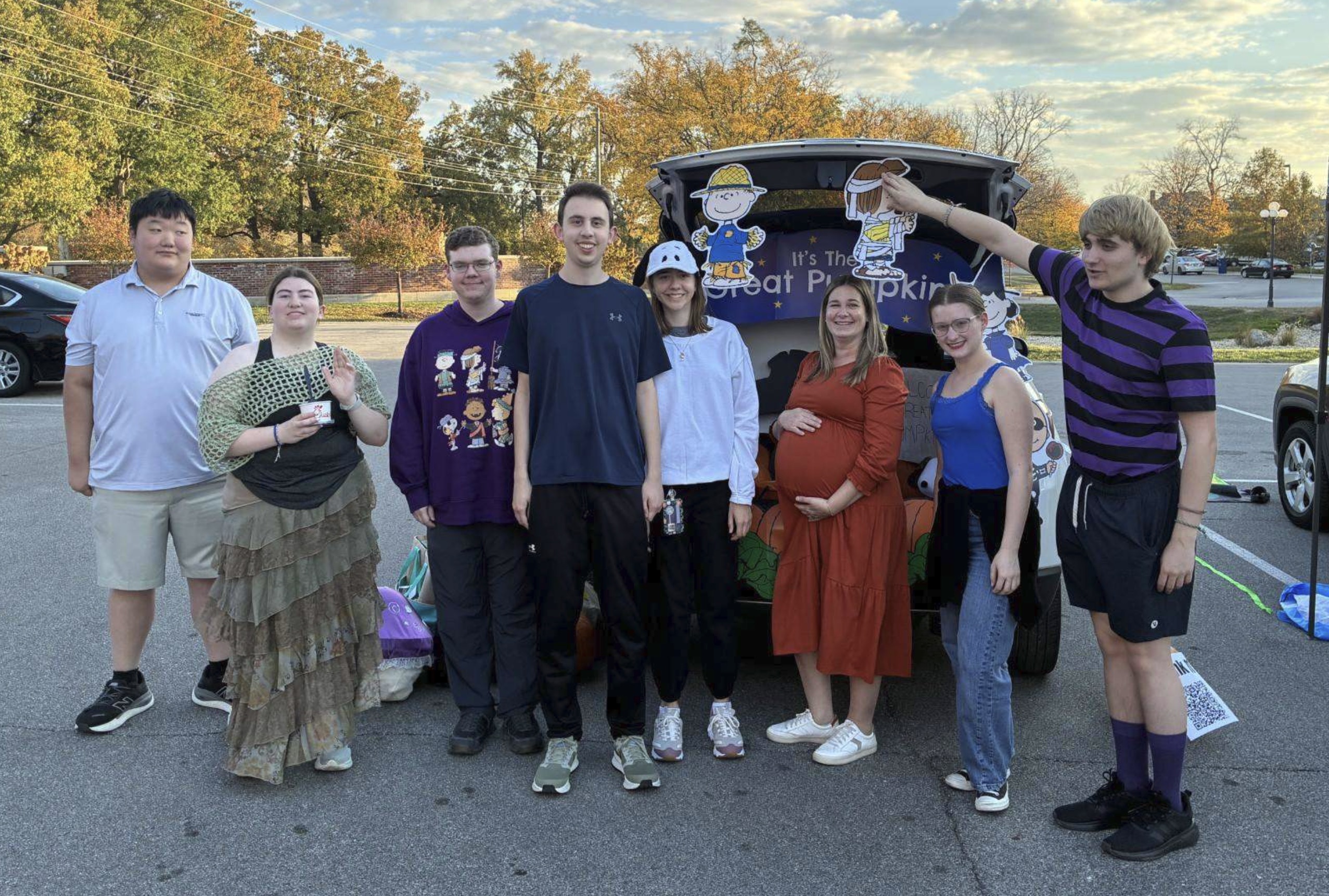
When SOK participates in campus-wide events such as tailgates or social events, even location can matter. Choosing a space at the end of a row may reduce exposure to competing sound, crowds, and visual stimulation while keeping students part of the larger experience.
These can look like small decisions.
To the person experiencing the environment, they may change whether participation feels manageable at all.
Connection Also Needs Places With Less Pressure
Not every meaningful relationship begins at a large event.
Sometimes it starts while eating a snack with someone. Studying near the same person each week. Sitting in a room where conversation can happen without competing with dozens of other sounds.
Spectrum of Knights students have access to a private lounge where they can study, socialize, eat, or spend time in a lower-traffic environment. They may also use a private sensory-neutral room on campus when they need to recharge and reduce sensory overload.
These spaces matter because stepping away does not have to mean withdrawing.
Knowing there is somewhere to reset may actually make a student more willing to try the busier experience in the first place.
The same thinking extends to residence life. SOK students living on campus may move in before the general campus move-in period, giving them an opportunity to become familiar with their room and surroundings before the busiest part of the transition begins.
The destination is the same.
The route into it is simply more manageable.
Structure Can Create Room for Something Unstructured
Spectrum of Knights also offers a structured monthly social event for SOK students, with peer mentors and friends invited.
The Autism Coordinator considers participants’ sensory profiles when choosing or adapting activities, whether the gathering takes place on or off campus.
There is an interesting balance in that approach.
The event is structured. The relationships are not.
Structure can answer some of the questions that make a social situation harder to enter: Where are we going? Who will be there? What are we doing?
Once some of that uncertainty is reduced, students have more room for the part no university program can manufacture: conversation, shared humor, common interests, and discovering that two people simply enjoy being around each other.
Authentic relationships cannot be assigned.
But universities can create better conditions for them to happen.
The Goal Is Not More Socializing. It Is More Choice.
There is no correct amount of social life for an autistic or neurodivergent college student.
One student may love tailgates, clubs, and a busy residence hall. Another may prefer one close friend and a quiet place to talk.
Neither experience is more successful because it looks more like someone else’s picture of college.
That may be one of the most important ideas behind neurodiversity-inclusive higher education.
Students should have opportunities to participate without having to perform a version of belonging that does not fit them.
Peer mentorship can make campus easier to enter. Sensory-aware planning can make experiences more sustainable. Quiet spaces can make recovery possible. Structured events can give relationships a place to begin.
None of those things guarantees friendship.
Friendship is too human to be engineered.
But when students spend less energy managing the environment, they have more energy available for the people inside it.
And sometimes, that is where belonging really starts.
Todd Root
 Todd Root is President of Strategy and Partnerships for BEST (Building Essential Skills Together) and K1ds Count Therapy, and a Clinical Advisory Board Member for Cicero Therapies. Autistic by wiring and Wall Street-honed by experience, and fluent in technology, intelligence, strategy, and big-idea thinking. Todd challenges the rules of neurodiversity by proving that innovation, not conformity, is a better measure of human potential. His mission is simple: help build the systems, opportunities, and communities that should have existed all along so every neurodivergent mind can thrive within community and self.