Locations
Resource Links



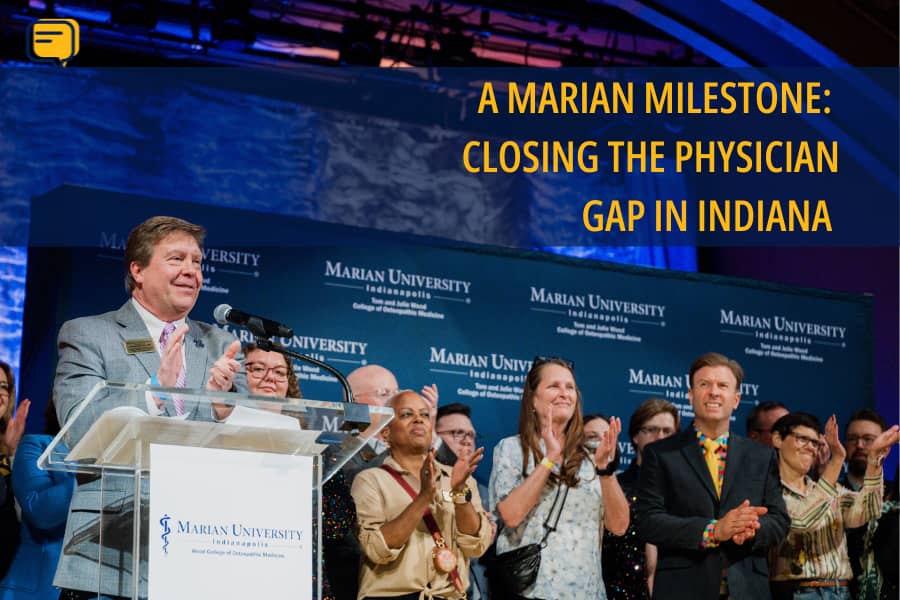
Graduate medical education (GME) is the pivot point where student doctors acquire the necessary training to complete their journey to become attending physicians. It consists of the years following medical school (residency and fellowship), ultimately deciding where and how future doctors practice. Its importance cannot be overstated, especially with an increasing need for healthcare professionals that shows no signs of slowing. This is true not only nationally, but especially here in Indiana, which ranks below many other rural states, such as Montana, Wyoming, and even Alaska, in residency positions per population. Fewer opportunities to train future physicians lead to fewer attending physicians staying in Indiana to practice.
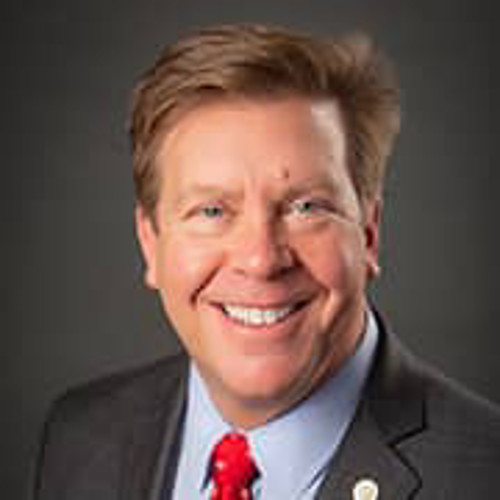 Spearheaded by Clif Knight, MD, the Marian University Tom and Julie Wood College of Osteopathic Medicine (MU-WCOM) recognizes the need to increase the number of residency slots and is working to achieve status as an Accreditation Council for Graduate Medical Education (ACGME)-accredited sponsoring institution.
A sponsoring institution assumes the responsibility of overseeing residency programs and ensuring they align with accreditation standards. The partnership with MU-WCOM grants residency programs access to an academic infrastructure, while the programs provide hands-on clinical experience necessary to further expand trainees' knowledge and skills. It is a collaborative effort, allowing both parties to work together to overcome deficits on either side. MU-WCOM provides resources such as library services, simulation centers, research opportunities, and other academic assets, allowing clinical partners to focus on providing high-quality care. The partnership with Marian shortens the timeline for starting residency programs and negates the lengthy process for hospitals to become sponsoring institutions themselves.
The process of GME expansion and residency development is complex, and Dr. Knight emphasized three major barriers—funding, accreditation, and faculty/clinical capabilities. Marian reduces the burden associated with achieving accreditation by serving as a sponsoring institution and offering the necessary academic infrastructure, while also supporting clinical partners’ efforts to tackle funding and faculty capabilities.
Residency training is not cheap. Each resident can often cost $200-250k per year, which federal funding does not typically cover completely. This leaves room for funding expansion efforts through rural residency grants, legislative support for state funding, and much more. Additionally, programs must provide clinical faculty who are passionate about training the next generation of physicians with an adequate patient volume paired with varied clinical exposure.
Fundamentally, the goals of both MU-WCOM and clinical partners are to make healthcare more accessible and improve health outcomes. Indiana, particularly in rural communities, is facing a very real shortage of healthcare services. Marian is aligned with its mission to expand primary care access amongst rural populations, increasing access and retaining physicians where they are needed most. While this work is still in its infancy, Marian’s role as a sponsoring institution may be one of the most pivotal in improving Indiana’s health and accomplishing the state’s long-sought-after goals.
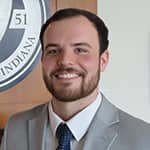 Jacob (Jake) Carrico is a second-year osteopathic medical student at the Marian University Tom and Julie Wood College of Osteopathic Medicine. He is from small town Loogootee, Indiana, and is currently exploring Emergency Medicine and Anesthesiology. In his free time, he likes cheering on local professional and collegiate sports programs and spending time with friends, his fiancé, Shalyn, and his golden retriever, Kit.
Discover the voices of Marian University's health professions students through "Franc Notes", a vibrant, student-led blog that embodies our Franciscan commitment to community, reflection, and compassionate service. Inspired by the rhythm of "SOAP notes," it features weekly insights—from "DO Diaries" interviews with physicians to summer reflections and program spotlights—fostering collaboration across disciplines."