Locations
Resource Links



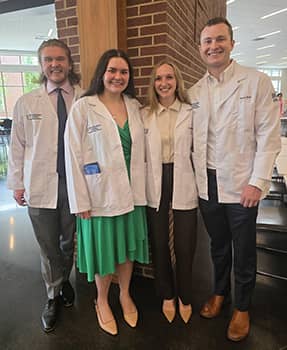 Boards are one of the most intimidating parts of medical school. While the Comprehensive Osteopathic Medical Licensing Examination (COMLEX) Level 1 is now pass/fail, the pressure hasn’t disappeared; success on this exam is essential to continue your medical training. During the didactic years, most students focus on passing their courses, often leaving board prep as a secondary priority. While the curriculum at the Marian University Tom and Julie Wood College of Osteopathic Medicine (MU-WCOM) does an excellent job preparing students, equally important is setting aside time for a quality, dedicated study period tailored to your learning style.
In this article, I’ve gathered advice and study strategies from a group of successful, newly minted third-year osteopathic medical students (OMS). Throughout medical school, you’ll meet extraordinary people, each with a unique study approach. I’ve tried to showcase a broad range of techniques to give second-year students a helpful introduction to creating their own dedicated study schedules. I’ll also cover how to apply the skills taught in Personal Identity Formation (PIF) sessions led by our Student Success Team, which resources helped each student, and how they passed their first board exam.
The number of third-party study resources can be overwhelming: Med School Bootcamp, OMTReview, UWorld, Pathoma, TrueLearn, Sketchy, and more. One of the best pieces of advice you'll hear is this: limit yourself to three core resources. This doesn’t mean you need to go cover to cover in each one, but every resource should have a clear purpose in your study plan. My personal recommendation is to:
What works for each student varies, but one common theme is the use of the AnKing deck, a comprehensive pre-made Anki deck that aligns with many popular resources. Even if you’re not an avid Anki user, it’s a great way to incorporate spaced repetition into your study routine. Many students experiment with resources during their first year, refining their approach as they progress through didactics. The key starting point is simply finding what works best for you.
In the rest of this article, I’ll share how several students planned their dedicated study periods, and what worked for them. The goal is to give you a variety of starting points and schedules to adapt for your own needs. You’ll notice that these students’ experiences are widely varied, which just goes to show there are many ways to succeed on boards.
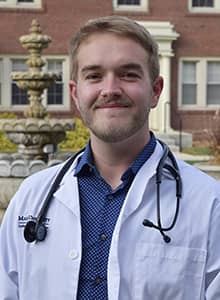 Many MU-WCOM students recognize Cameron Brooks from his now-famous Anki decks, which have helped countless medical students succeed during their first two years. He has been gracious enough to share his experience preparing for boards.
Cameron took only the COMLEX Level 1 exam, choosing not to take the United States Medical Licensing Examination (USMLE) Step 1, as he plans to pursue a career in family medicine and felt that the additional exam did not align with his career goals.
He began his board preparation unusually early, during the summer prior to his second year, starting with just a few board-style questions each day. This approach, though uncommon, highlights the power of long-term consistency, which pays off significantly over time. Throughout his second year, Cameron gradually increased his study load and ramped up his efforts further around spring break.
This brings up an important concept in board prep: blocking. Blocking means setting milestone goals throughout your study period. Key checkpoints I recommend planning around include winter break, spring break, and the start of your dedicated study period. Aim to complete specific tasks by these points. Your goals can be as simple or as ambitious as you want, but the key is to build your board-specific knowledge base steadily.
For example, many students finish Sketchy Microbiology and Pharmacology as part of their preparation; I personally finished Sketchy Micro over winter break.
Cameron’s study plan followed a clear, month-by-month progression. He started small with five questions a day over the summer, gradually increasing to 25 questions and a couple of hours of Bootcamp content review by fall. Cameron would complete the AnKing deck associated with each of the content sections during his reviews. His workload ramped up further during winter break and dedicated, eventually reaching 120 questions a day before taking a rest day prior to his exam.
A full breakdown of Cameron’s schedule can be seen in the chart linked at the end of this article.
Cameron’s approach was simple, consistent, and highly effective as he passed COMLEX Level 1 with a wide margin. His advice? “Start easy and early.” If given the chance, he says he would follow the exact same plan again.
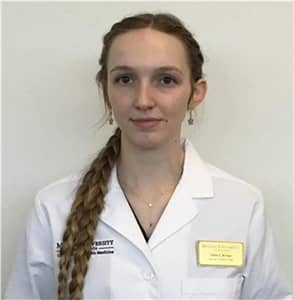 Noelle Michael is a fellow Health Professions Scholarship Program (HPSP) recipient at MU-WCOM and has served as a cardiopulmonary & renal systems tutor over the past year. This role gave her an early foundation for COMLEX Level 1 preparation. For her board prep, she used a streamlined set of resources: AnKing, Med School Bootcamp, Pathoma, TrueLearn, and Sketchy.
Noelle chose to take only COMLEX, as the military requires a single board exam for HPSP recipients, and taking Step 1 would not have provided any additional benefit, regardless of her future residency goals. She began preparing in August of her second year, opting to take the summer completely off to recharge. During the summer after year one, she completed both the Direct Commissioning Course (DCC) and Basic Officer Leadership Course (BOLC), Army training requirements that took up most of her break.
Noelle found that many of the resources she used for boards also reinforced her didactic coursework. Of these, Pathoma and Sketchy Micro/Pharm were the most helpful. She especially recommended Pathoma, which is available for free to MU-WCOM students and is often underutilized. Pathoma explains the core pathologies most likely to appear on board exams in a clear, concise manner. Her advice: keep your list of resources short; too many can overwhelm rather than help.
Her dedicated study period was only four weeks, shorter than that of many of her classmates. She didn’t study every single day, choosing instead to take breaks when needed rather than adhering to a rigid schedule. Noelle took her exam early, on June 9th, feeling that her didactic coursework had prepared her well. She believed that extending her study period wouldn’t have meaningfully improved her performance.
If she were to change anything, Noelle said she would have started using Pathoma earlier. Much of the content could have reinforced her understanding during the first two years and saved her some frustration along the way.
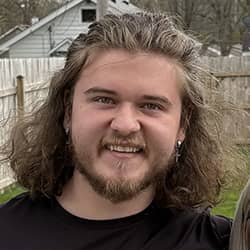 Jared Schoon is an exceptionally sharp student who tends to grasp complex medical concepts far quicker than most. What might take others multiple study sessions to master, he often understood in a single pass. Because of this, Jared didn’t rely heavily on third-party resources during the didactic portion of medical school, instead reserving them for his dedicated board study period.
Jared’s study plan was unique in several ways. He planned a vacation during his dedicated period and encountered many popular memory tools for the first time while preparing for boards. This approach gave him a fresh perspective, allowing him to learn new ways of organizing information rather than relying solely on rote memorization.
His study days followed a consistent and straightforward routine. He would start with his morning routine, dive into his TrueLearn questions, take a lunch break, and then focus on content review. He ended his day by reviewing the questions he had completed earlier, reinforcing key concepts.
Importantly, Jared recognized the pitfalls of studying at home, too many distractions, and instead did most of his studying at Marian’s campus. This is perhaps the most valuable takeaway from Jared’s approach: find your ideal study environment. Whether it’s campus, a coffee shop, the library, or your home, identifying where you are most productive is crucial.
Although Jared is pursuing a surgical career, he chose to take only the COMLEX Level 1 exam. He spoke directly with the program director at his desired residency and was advised that taking Step 1 was unnecessary for his application. This highlights an essential point: understanding your goals and communicating with programs can clarify whether both exams are truly needed. While many students choose to take both COMLEX and Step 1 to maximize their opportunities, it’s a personal decision that carries risks.
Jared began his board prep in February, starting small with just five TrueLearn questions a day. Early preparation was less about getting every question right and more about familiarizing himself with the board exam format, which differs significantly from in-house school exams. He also recognized the challenge of balancing board prep with ongoing coursework, a struggle familiar to most second-year students. By starting small, Jared built a solid foundation without overwhelming himself.
He took COMLEX Level 1 later than most, in the second week of July. This deliberate choice allowed him to accommodate personal commitments and stretch out his study period. The extended schedule gave him time to close personal knowledge gaps without the pressure of an overly compressed timeline. Jared felt that this approach worked well and says he would follow the same plan again.
During his dedicated period, his primary resources were Dirty Medicine, a free YouTube channel popular among DO (Doctor of Osteopathy) students, and TrueLearn. A complete breakdown of Jared’s study plan is included in the table below and linked at the end for quick reference.
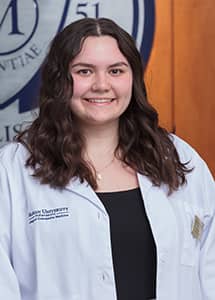 Izabella Jordan, “Izzi” to many, is one of the most conscientious students at MU-WCOM. She has tutored in a variety of subjects, including Anatomy, Foundations, and CPR, for over a year. Her board preparation is likely at the upper limit of what most students would plan for, but it reflects one of the most thorough approaches you'll find. Izzi successfully completed both the USMLE Step 1 and COMLEX Level 1 exams and was one step closer to becoming an obstetrician-gynecologist.
She began content review in the summer before her second year with Sketchy Microbiology, carefully watching the videos, annotating the images, and completing the associated AnKing flashcards. In the fall, she worked through Sketchy Pharmacology, aligning her review with her coursework. For example, when learning about Parkinson’s disease in Neuroscience, EENT, and Motor Systems (NEMS), she would watch the Sketchy lesson on COMT inhibitors. She also completed all assigned TrueLearn questions during didactic courses, which helped her become comfortable with board-style questions. For most of the year, boards took a backseat to excelling in her coursework.
In the spring semester, Izzi added question banks into her routine, completing 15 UWorld questions and 15 TrueLearn questions per day. She gradually increased this to 40 of each question bank daily by the end of classes. She reviewed these questions systematically, starting with material from systems she had already covered: Cardiology, Pulmonology, Hematology/Oncology, and Renal.
Spring break marked the turning point in her board prep. Izzi finished Sketchy Pharm and the corresponding AnKing cards during this time. After spring break, all students took a Comprehensive Osteopathic Medical Self-Assessment Examination (COMSAE) to gauge their progress. When Izzi reviewed her results, she noticed pathology was a weak area, so she incorporated Pathoma into her study plan. She strongly recommends Sketchy and Pathoma as the two most important content review resources for boards, advising students to start using them early.
Izzi’s dedicated period spanned five weeks, starting in mid-May. She scheduled Step 1 for June 9 and COMLEX for June 16, giving herself a week between exams to recover and refocus. During her first dedicated week, she completed one block of 40 UWorld questions and one block of TrueLearn questions daily, ensuring they were mixed to simulate the real exam. Each week, she increased her workload: two blocks per day during weeks two and three, and four blocks each morning during the final two weeks. By the end of the dedicated time, she had completed all of TrueLearn and 90% of the UWorld question bank.
Her afternoons were dedicated to reviewing weak areas, during which she completed the entirety of Pathoma. Every Friday, Izzi simulated an exam day by taking either a COMSAE or a practice Step 1 exam to replicate the testing environment and track her progress.
Izzi was pleased with how her preparation went, feeling well-prepared for both exams. She shared that the hardest part was maintaining motivation, but sticking to her schedule helped her walk into both exams confident and ready.
Board exams are one of the biggest challenges of medical school, and it’s easy to feel overwhelmed by the sheer number of resources available. But at the end of the day, success comes from having a clear plan and sticking to it. Whether you start early or build up during your dedicated period, the key is to find what works for you and trust your preparation.
My hope is that this article gave you a clearer vision of how to shape your own study schedule. Use these examples not as rigid templates, but as inspiration to craft a plan that fits your learning style, pace, and goals. With consistency, flexibility, and the right mindset, you'll be ready to tackle boards, and take the next step in your medical journey.
Link to Student Study Schedules: https://bit.ly/4lI7RPW
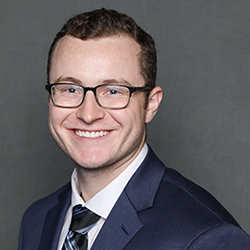 Samuel Baule is a third-year medical student at the Marian University Tom and Julie Wood College of Osteopathic Medicine and a Second Lieutenant in the United States Army. With a background in biomedical engineering from the University of Iowa, his academic interests span STEM education, trauma care, and the integration of osteopathic principles in clinical training. Sam is passionate about mentorship, research, and empowering future physicians through service, innovation, and reflection.
Discover the voices of Marian University's health professions students through "Franc Notes", a vibrant, student-led blog that embodies our Franciscan commitment to community, reflection, and compassionate service. Inspired by the rhythm of "SOAP notes," it features weekly insights—from "DO Diaries" interviews with physicians to summer reflections and program spotlights—fostering collaboration across disciplines."