Locations
Resource Links


As I mentioned in my last post, you know that I think of accreditation as something more than a formal process; it's a commitment to stewardship and to the people our programs exist to serve. But what does that commitment actually look like in practice?
For Marian University's developing occupational therapy and physical therapy programs, it looks like candidacy.
Candidacy is a formal stage in the accreditation journey, and it's worth understanding what it means, especially for prospective students exploring these programs. When a new health professions program seeks accreditation, it doesn't begin the process with a fully enrolled student body. Accreditation candidacy is the bridge between a program's founding vision and its full accredited status. It signals that a program has demonstrated sufficient foundational readiness, which includes the right faculty, curriculum framework, institutional support, and resources, to move forward under formal accreditor oversight.
For Marian's occupational therapy programs — the Doctor of Occupational Therapy (OTD), the Master of Occupational Therapy (MOT), and the Associate in Applied Science in Occupational Therapy Assistant (AAS-OTA) — that oversight comes from the Accreditation Council for Occupational Therapy Education (ACOTE®). For the developing physical therapy programs, it comes from the Commission on Accreditation in Physical Therapy Education (CAPTE®). Both are nationally recognized bodies with rigorous, detailed standards.
Candidacy is not a lesser status. It is a serious designation that reflects genuine readiness and a clear, accountable path forward.
While the specific requirements differ between accrediting bodies, the candidacy process generally involves several interconnected layers of work. It begins with a deep engagement with the accreditor's standards, which address everything from faculty qualifications and curriculum content to fieldwork, clinical, and capstone education requirements, as well as student support services. Program developers must not only understand these standards but demonstrate, through detailed written reports, that the program meets or is actively building toward each one.
That documentation process is extensive. It draws on institutional data, faculty credentials, course syllabi, policy statements, and evidence of planning and infrastructure. Nothing is assumed; everything must be shown.
In many cases, the process also involves a formal review visit, during which trained peer reviewers examine the program's documentation and meet with faculty, administrators, and students. Their findings inform the accrediting body's decision.
Throughout, the institution remains in ongoing dialogue with the accreditor, responding to feedback, addressing gaps, and demonstrating continued progress.
What doesn't always show up in a description of the process is the human effort it requires. Candidacy reports are not written by a single person in isolation. They reflect the collective work of faculty who have spent years developing curriculum, fieldwork, clinical, and capstone programs; fieldwork, clinical, and capstone coordinators who have built partnerships; administrators who have secured resources and institutional commitment; and university leadership who have championed these programs from vision to reality.
At Marian University, that work is happening now, quietly, carefully, and with genuine purpose. The faculty developing these programs bring not only academic credentials, but also clinical experience, professional passion, and a shared belief that Marian University is the right place to train the next generation of occupational and physical therapists.
For prospective students, understanding candidacy matters. Enrolling in a program in candidacy means joining a program that is under the accreditor's oversight and on a defined path to full accreditation. It means choosing a program that has been held to an external standard from the beginning.
It also means being part of something meaningful. The first cohorts of any developing program help shape its culture, its identity, and its legacy. They are not just students; they are pioneers.
The candidacy reports that have been filling my computer screens represent thousands of hours of careful, collaborative work. They also represent something larger: Marian University's commitment to doing this right. To build programs that are worthy of the trust that students, patients, and the profession place in them.
That commitment doesn't end with accreditation. It deepens. And it begins, always, with the willingness to be held accountable, to ask, honestly and openly, Are we doing this right?
The answer, at Marian, is yes. And we are on track to prove it.
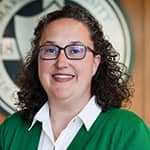 Kate Huber, EdD, OTD, OTR, serves as Associate Dean of Health Sciences and Founding Program Director of the graduate occupational therapy programs at Marian University, where she has been a member of the faculty since April 2024. With nearly two decades of experience in occupational therapy education, Dr. Huber brings expertise in curriculum development, accreditation, and interprofessional education to her leadership role.
Discover the voices of Marian University's health professions students through "Franc Notes", a vibrant, student-led blog that embodies our Franciscan commitment to community, reflection, and compassionate service. Inspired by the rhythm of "SOAP notes," it features weekly insights—from "DO Diaries" interviews with physicians to summer reflections and program spotlights—fostering collaboration across disciplines."