Locations
Resource Links




The journey to becoming an occupational therapist rarely follows a straight line. Some discover the profession by chance, stumbling across an unfamiliar program name in a college catalog. Others arrive through personal experiences—watching a family member receive therapy, volunteering in community settings, or recognizing a disconnect between their chosen path and their true calling. What unites these varied journeys is a shared recognition: occupational therapy offers a unique way to make a meaningful difference in people's lives.
At Marian University, our occupational therapy faculty embody this reality. Each took a different route into the profession—some through direct-entry pathways to master's programs, others after completing bachelor's degrees in various fields, one through an entry-level doctoral program, and one through an entry-level bachelor's degree when that option was still available. Their varied educational experiences reflect the profession's evolution and demonstrate that there's no single "right way" to become an occupational therapist. Here are their stories.

Laura Nolan, OTR, discovered occupational therapy the way many of us find our calling—by following curiosity. "I first learned about occupational therapy after seeing it on a list of programs offered at a college. I had never heard of it and thought it was an odd name, so I googled it and immediately said, 'That's what I'm going to do.'" While Laura's initial interest stemmed from her experiences with children and peers with disabilities, she quickly appreciated the profession's breadth. "I enjoy the flexibility and the variety of job options within the field and have always felt that I should never be bored as an occupational therapist." Laura entered occupational therapy through a direct-entry pathway into an entry-level master's program, allowing her to begin her specialized education immediately after completing the prerequisites.
Gracyn Conner, OTR, took a methodical approach to career planning, researching top careers in the United States. When occupational therapy appeared at the top of the list, she began investigating further—and discovered a profound connection to her own experience. "I realized that one of my most meaningful volunteer experiences in high school was facilitated by an occupational therapist. I volunteered at a supported employment non-profit, where I saw people with a wide variety of skill levels and interests engaged in purposeful, accessible jobs and social engagement." That realization shaped her career choice: "I wanted the opportunity to meaningfully help others each day." Gracyn completed a bachelor's degree in psychology before pursuing an entry-level doctoral program in occupational therapy, demonstrating another common pathway into the profession.
Lisa Willey, COTA, was introduced to occupational therapy as a child, watching her brother receive services. "My brother, who has an intellectual disability, was getting OT, but it really looked like he was just playing, and the therapist commented that she got paid to play. I remember thinking I wanted to do that when I grew up." Though she initially pursued physical education teaching and coaching, observation experiences in various OT settings revealed the perfect synthesis: "I realized I could do both! I have enjoyed the multiple areas of practice I could choose, adding to the flexibility and lack of burnout the field lends itself to." Lisa's path through an occupational therapy assistant program demonstrates the vital role that the Certified Occupational Therapy Assistant (COTA®) plays in the profession.
Amanda Luper, OTR, initially set her sights on physical therapy after her grandmother's stroke introduced her to rehabilitation. As a student-athlete, PT seemed the natural fit. But during her first semester as an undergraduate biology major, she began to question her choice of PT. "I decided to shadow both a PT and an OT in an outpatient clinic. Through this experience, I quickly realized that OT aligned more closely with my interests and values." That willingness to reconsider led to admission to a direct-entry master's program in occupational therapy and, eventually, to her specialty in acute care and ICU settings.
Kate Huber, OTR, always knew she wanted to teach, but her path to becoming an occupational therapy educator began with a babysitting job in middle school. "I watched two siblings regularly while their parents were in the NICU with their newborn," she recalls. As she continued caring for the family, the mother taught her special techniques for the youngest child, who had medical needs. When occupational and physical therapists began providing home-based services, Kate discovered her calling: "I fell in love with occupational therapy and the teaching of the skills for life." Kate earned her entry-level bachelor's degree in occupational therapy—a pathway that was available before 2007, when the profession transitioned to requiring graduate-level education. After years of pediatric practice, her love of mentoring students drew her back to school to pursue a career in OT education, demonstrating how occupational therapists continue to grow and evolve throughout their careers.
These varied journeys lead to two distinct but interconnected roles in occupational therapy: the Occupational Therapist Registered (OTR®) and the Certified Occupational Therapy Assistant (COTA®). While both professionals work collaboratively to help clients participate in meaningful activities, their educational paths and scope of practice differ.
Today, occupational therapists complete an entry-level graduate degree—either a master's OR doctoral degree—in occupational therapy from an accredited program. This represents an important choice point for prospective OTRs: both pathways lead to the same credential and scope of practice, but they differ in program length, depth of coursework, and focus areas.
The profession has evolved its educational requirements over time, reflecting occupational therapy's growing complexity and evidence base. Before 2007, students could earn entry-level bachelor's degrees in occupational therapy. The profession then transitioned to requiring entry-level master's degrees, and in recent years, entry-level doctoral programs have emerged as an additional pathway. This evolution demonstrates occupational therapy's commitment to advancing clinical reasoning, scholarship, and specialized practice while maintaining multiple entry points into the profession.
Whether you choose an entry-level master's OR entry-level doctoral program, your educational journey will include:
Students may enter occupational therapy graduate education through different pathways. Some programs offer direct-entry pathways that allow students to begin specialized OT coursework immediately after completing prerequisites. In contrast, other students complete a bachelor's degree in another field before applying to entry-level master's or doctoral programs. All pathways lead to the same OTR® credential and professional opportunities.
OTRs conduct comprehensive evaluations, develop intervention plans, document client progress, supervise COTAs, and make clinical decisions about discharge planning and modification of treatment approaches.
Occupational therapy assistants complete an associate or bachelor’s degree from an accredited occupational therapy assistant program. Their educational path includes:
COTAs implement treatment plans developed by OTRs, document client responses to interventions, and contribute observations that inform clinical decision-making. They work under the supervision of occupational therapists, though the nature and frequency of that supervision varies by setting and state regulations.
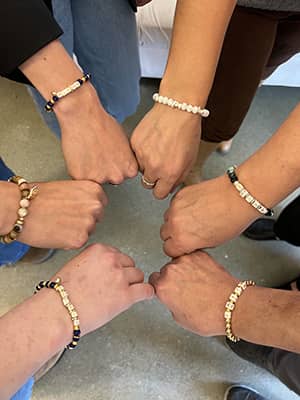
Regardless of which path you choose—entry-level master's, entry-level doctoral, or occupational therapy assistant—occupational therapy is fundamentally collaborative. OTRs and COTAs work together as partners in client care, each bringing essential expertise to the therapeutic relationship. This collaborative approach extends beyond the OTR®-COTA® partnership to include interprofessional teams, including physical therapists, speech-language pathologists, physicians, nurses, social workers, and many others. As you consider your journey into occupational therapy, recognize that you're not just choosing a profession; you're joining a community of healthcare professionals committed to helping people engage in the activities that give their lives meaning.
At Marian University, we recognize that every student brings a unique story to their occupational therapy education—stories shaped by family experiences, volunteer work, career pivots, and personal observations. Our faculty understand this reality firsthand because they've lived it. Their varied educational paths—from entry-level bachelor's degrees to direct-entry master's programs to doctoral programs pursued after completing other degrees—enrich our teaching and mentoring. They know what it's like to discover occupational therapy through different routes, and they bring that understanding into every classroom and clinical conversation.
These varied backgrounds enrich our learning community and reflect a core Franciscan value: dignity of the individual. Your path to occupational therapy, whether direct-entry or following another degree, whether master's or doctoral, whether OTR® or COTA®, represents more than a career choice. It reflects your recognition of each person's inherent worth and your commitment to helping individuals of all abilities participate fully in their lives. That recognition—that each person's occupations matter, that everyone deserves support in doing what brings them purpose—is what transforms occupational therapy from a career into a calling.
Whether you're drawn to the clinical reasoning and leadership of the OTR® role (through an entry-level master's OR doctoral program) or the hands-on therapeutic partnership of the COTA® role, occupational therapy offers a path to meaningful work that adapts to your evolving interests and life circumstances. To learn more about the profession and explore which path might be right for you, visit whychooseot.com.
If you're considering occupational therapy education at Marian University, we invite you to explore our programs: marian.edu/ot.
Your journey to occupational therapy begins with curiosity—about the profession, about yourself, and about the difference you want to make in the world. Where will your path lead?
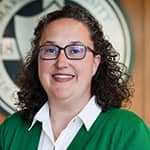 Dr. Kate Huber serves as Associate Dean of Health Sciences and founding program director of the graduate occupational therapy programs at Marian University, where she has been a member of the faculty since April 2024. With nearly two decades of experience in occupational therapy education, Dr. Huber brings expertise in curriculum development, accreditation, and interprofessional education to her leadership role.
Discover the voices of Marian University's health professions students through "Franc Notes", a vibrant, student-led blog that embodies our Franciscan commitment to community, reflection, and compassionate service. Inspired by the rhythm of "SOAP notes," it features weekly insights—from "DO Diaries" interviews with physicians to summer reflections and program spotlights—fostering collaboration across disciplines."