Locations
Resource Links


One of the best things about being a student at the Marian University Tom and Julie Wood College of Osteopathic Medicine (MU-WCOM) is the opportunity to connect with physicians and alumni who have walked the path we’re on now. Through these connections, we gain access to invaluable mentorship and advice, especially from physicians in specialties that are often less visible to students. This series aims to shine a light on such fields and offer practical guidance for exploring them.
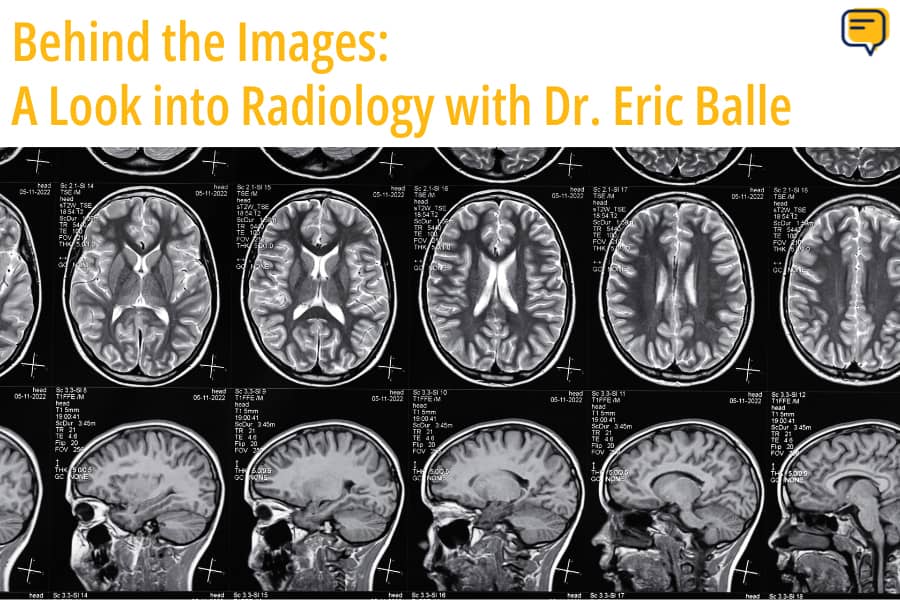
In this article, we take a closer look at diagnostic radiology through the lens of Eric Balle, MD, a postgraduate year 5 (PGY-5) radiology resident at Indiana University. Many students may recognize his name from our year-long ultrasound enrichment program or know his wife, Megan Balle, Ph.D., our Assistant Professor of Anatomy. Dr. Eric Balle’s story is a compelling reminder that your final specialty decision may not be the one you had in mind when you started medical school.
Radiology is one of the few specialties that is not part of the core clerkship experience in medical school, leaving many students with limited exposure to its scope. Diagnostic Radiology (DR) consists of a one-year internship followed by four years of residency. Many residents pursue an additional one- or two-year fellowship, with options ranging from neuroradiology to interventional radiology.
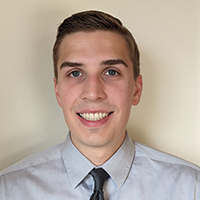
Dr. Balle began his academic journey at Marquette University, where he earned a degree in biomedical sciences before attending Wayne State University School of Medicine in Detroit. While initially drawn to anesthesiology, he found his specialty interest shifting toward radiology during clinical rotations. Like many students, he discovered that making an informed career choice requires real exposure to a specialty’s daily work and role in patient care.
For Dr. Balle, a pivotal moment came when a renal transplant patient developed a fever of unknown origin. Despite an extensive infectious workup, no clear diagnosis emerged. It wasn’t until a CT scan was ordered that a radiologist could diagnose transplant rejection, prompting a shift in management that ultimately restored the patient’s health. This experience made a lasting impression and led Dr. Balle to explore radiology more seriously.
He describes radiologists as the "detectives" of medicine. With minimal clinical context, they use imaging—CT, X-ray, MRI—to identify disease processes, recommend further testing, and guide treatment. Every image offers a puzzle to solve, and no two cases are the same. That intellectual challenge is part of what continues to draw him to the field.
Radiology is one of the "ROAD" specialties—Radiology, Ophthalmology, Anesthesiology, and Dermatology—known for offering excellent work-life balance and competitive compensation. As Dr. Balle explained, most radiology residency days run from 8 a.m. to 5 p.m., and while residents do take call shifts, it typically amounts to one night every other week.
Call in radiology differs from other specialties. Rather than waiting for consults, radiologists are constantly receiving studies to read, often with little downtime. Still, the lifestyle remains more predictable than that of surgical or acute care fields.
Radiologists also perform a variety of image-guided procedures, such as thoracenteses and biopsies. These are often associated with interventional radiology (IR), but diagnostic radiologists are trained in many of them as well. Attendings can choose how much procedural work to include in their practice, which can influence both lifestyle and compensation.
Dr. Balle also emphasized a major lifestyle perk: no after-hours charting. Once you're done reading studies for the day, you're truly done, something that’s rare in many other specialties.
Radiology, like other ROAD specialties, has become increasingly competitive. According to recent NRMP data, the average Step 2 score for matched applicants is 249, with around 8 publications.
Dr. Balle shared several key insights for students interested in Diagnostic Radiology:
No specialty is without its challenges, and radiology is no exception. Dr. Balle noted that one of the biggest hurdles is the misconception about the impact that radiologists can have on patient care and the clinical information necessary from the care team. When physicians request imaging with a limited clinical context, it can potentially delay diagnosis and hinder effective collaboration.
He also pointed out that radiologists often work behind the scenes and rarely interact with patients. If direct patient gratitude is something you rely on, radiology may not be the right fit. However, if solving complex clinical puzzles excites you, radiology offers daily opportunities to make a meaningful impact, even if it goes unseen.
With the rise of artificial intelligence (AI), many students wonder whether radiology will still exist in its current form. Dr. Balle addressed this concern directly.
AI, he explained, is already part of many hospital systems and serves to make reading more efficient, not to replace radiologists. Current laws require board-certified physicians to confirm diagnoses and treatment plans, and AI is far from being able to perform procedures or make nuanced clinical decisions. Dr. Balle expects AI to enhance the field, not eliminate it.
His advice? Don’t be afraid to pursue radiology, or any specialty you’re passionate about, based on fear of the unknown. There will always be a role for skilled physicians.
Radiology is more than just sitting in a dark room reading scans. It’s a specialty rich with intellectual challenge, procedural skill, and a lifestyle that allows space for life outside of medicine. For students seeking a field that blends analytical thinking with tangible patient impact, radiology is well worth exploring.
Thank you to Dr. Eric Balle for taking the time to share his experiences and advice with MU-WCOM students. If you’re curious about radiology or want to learn more about the path, don’t hesitate to reach out to him; he’s happy to help the next generation find their fit.
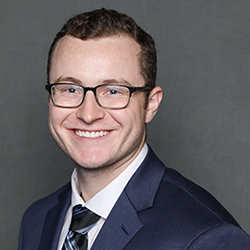 Samuel Baule is a third-year medical student at Marian University Wood College of Osteopathic Medicine and a Second Lieutenant in the United States Army. With a background in biomedical engineering from the University of Iowa, his academic interests span STEM education, trauma care, and the integration of osteopathic principles in clinical training. Sam is passionate about mentorship, research, and empowering future physicians through service, innovation, and reflection.
Discover the voices of Marian University's health professions students through "Franc Notes", a vibrant, student-led blog that embodies our Franciscan commitment to community, reflection, and compassionate service. Inspired by the rhythm of "SOAP notes," it features weekly insights—from "DO Diaries" interviews with physicians to summer reflections and program spotlights—fostering collaboration across disciplines."