
Person First, Physician Second
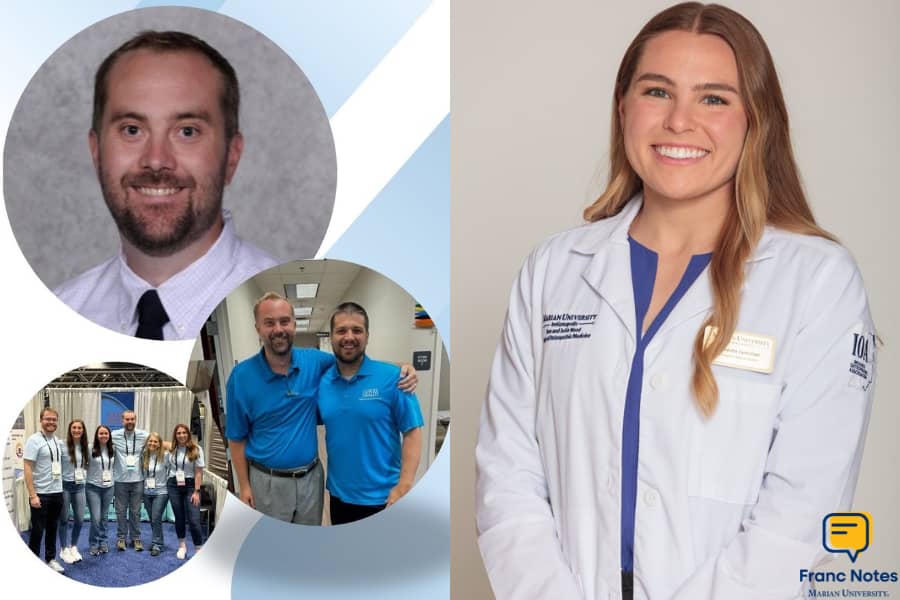
Dr. George Fritch on Family Medicine and the Union Hospital Residency Program
For many medical students, choosing a specialty can feel overwhelming—and selecting a residency program just as daunting. While residency websites outline curricula, call schedules, and elective opportunities, they rarely capture what it feels like to train at a program or why someone chooses one path over another. As I begin thinking ahead to clinical rotations and residency, I had the opportunity to speak with George Ralph Fritch IV, MD, FAAFP, Program Director of the Union Hospital Family Medicine Residency Program, about his journey into family medicine, what drew him to Union Hospital, and the advice he offers students exploring their own careers.
Finding the Right Fit
Dr. Fritch’s introduction to medicine came through his mother, a nurse at a local hospital. She worked the second shift, from 3-11 p.m., and he reflects fondly on his dad taking him to have dinner with her at work. “I feel like, to an extent, I grew up in the hospital,” he recalled.
Dr. Fritch’s journey continued at Indiana State University before he attended the Indiana University School of Medicine. He completed his Family Medicine residency at Union Hospital in 2019, entered full-spectrum clinical practice, and eventually returned to the residency as faculty in 2021 before becoming Program Director in 2023. Like many medical students, he did not begin his training with every aspect of his future career mapped out. What ultimately drew him to family medicine was its breadth and flexibility. Rather than limiting physicians to one patient population or practice style, family medicine allows physicians to build careers that reflect both their professional interests and personal priorities.
In retrospect, Dr. Fritch reflected on his childhood primary care provider, who also maintained a wide scope of practice. He fondly remembers knowing that “no matter what was wrong with you, he was going to take care of you.”
That versatility and compassion became recurring themes throughout our conversation. Whether a physician enjoys obstetrics, inpatient medicine, procedures, addiction medicine, sports medicine, or outpatient primary care, family medicine creates opportunities to build lasting relationships with patients and shape a career around personal passions rather than a rigid mold.
Dr. Fritch recalled that as a medical student, he enjoyed all his rotations and could see himself in each field. “Then, I had family medicine, and that’s where things really came together,” he said. “I don’t have to give up a part of adult medicine that I love, but I can also take care of children, and I can do OB.” For students still exploring their options, it was refreshing to hear family medicine described not as a single fixed path, but as a specialty that adapts as a physician grows.
Learning Beyond the Textbook
One of the questions I was most curious about was how residency compares to what students imagine during medical school. Dr. Fritch admitted that one of his biggest surprises as an intern was realizing that learning no longer looked the way it always had. He described the first year of residency as "drinking water from a firehose." Unlike medical school, where learning primarily happens through lectures, textbooks, and exams, residency shifts almost entirely to experiential learning. Residents learn by caring for patients, discussing cases with colleagues, and making clinical decisions every day.
Because this learning happens so naturally, he noted that it sometimes felt like he was not making progress. It was not until the next class of interns arrived that he realized just how much he had grown.
Reflecting on that transition, Dr. Fritch explained that confidence develops gradually. Around the middle of the second year, many residents begin recognizing not only how much they have learned, but also what kind of physician they hope to become. As clinical confidence grows, so does clarity about future career goals, allowing residents to discover the patient populations, procedures, and practice settings that fit them best. For students preparing for clinical rotations, it was a reassuring reminder that growth often happens long before we recognize it in ourselves.
Finding the Right Residency
As our conversation shifted toward training programs, I wanted to understand what drew Dr. Fritch to the Union Hospital residency, and why he chose to return years later as faculty and program director.
He explained that he was looking for comprehensive, broad-spectrum training in a supportive environment. Union’s unopposed residency structure, welcoming culture, and strong sense of camaraderie made it the right fit.
An "unopposed" residency model means family medicine residents do not compete with other specialty residency programs for clinical experiences. As Dr. Fritch put it, “There's only one type of resident in that entire hospital system.” At unopposed programs, family medicine residents play a vital role in caring for patients across all clinical settings while collaborating directly with specialists when needed.
Rather than training at a massive academic medical center or a secluded rural hospital with limited resources, Dr. Fritch described Union Hospital as offering an ideal middle ground. Located in Terre Haute, Union serves as the primary hospital for a 70-mile radius. As a result, Union “draws from a very large patient care area… [which] gives our residents real exposure to what underserved medicine looks like.”
Residents build confidence caring for a wide variety of clinical cases and coordinating with specialists as needed. As Dr. Fritch explained, "I think it's a really rewarding way to practice... we find that happy medium between having the resources we need without feeling super encumbered."
Growing as a Physician—and as a Person
Although procedural training and clinical volume are vital, one of the most meaningful parts of our conversation centered on finding an environment that supports personal growth. While residency was undeniably demanding, Dr. Fritch never felt pressured to sacrifice his core values or personal relationships.
He credits Union's culture with making that balance achievable: "I feel like Union did a really good job of making sure that I was supported as a person first and as a physician second... It made me feel like this is a place where I can grow as a physician and also grow as a person." That human-centered philosophy was a primary reason he returned after years in clinical practice.
After spending time as an attending physician, he realized he missed the teaching environment. When a resident rotated through his clinic, he rediscovered the fulfillment of mentoring future doctors. Soon after, he accepted a faculty position at Union in 2021 before stepping into the Program Director role in 2023.
Today, his role combines three passions: patient care, resident education, and specialty advocacy. Serving as Program Director, he shared, has allowed him to become "more than just a doctor for the patients on my panel, but rather... a leader within my community, too."
Advice for Marian Students
As our conversation concluded, I asked Dr. Fritch what advice he would offer students preparing for clinical rotations. His primary recommendation was simple: approach every rotation with genuine curiosity, even if you think you already know what specialty you want to pursue.
"Go into every rotation with the mindset of, 'This might be what I end up doing for the rest of my life.'"
Even for students who feel certain about their trajectory, he explained that every specialty offers insights that benefit future patients. Skills gained in surgery, psychiatry, pediatrics, or obstetrics become essential tools for counseling patients throughout their healthcare journey.
He also encouraged students to seek authentic mentorship rather than treating application letters as a checklist item. As someone who extensively reviews residency applications each season, he emphasized that genuine relationships matter far more than a letter from a specific department head. “I couldn't care less if [a letter of recommendation] is strictly from your intended specialty. I just want to see: is this someone who clearly loved working with you?” A physician in any specialty who knows you well can compellingly highlight your individual strengths and character.
His most memorable advice, however, focused on personal clarity: "Be very, very brutally honest with yourself." Whether selecting a specialty, ranking residency programs, or planning a career, he encouraged students to reflect honestly on what matters most—family, community, work-life balance, geographic location, or scope of practice—and let those values guide their decisions.
Looking Ahead
Speaking with Dr. Fritch was a powerful reminder that choosing a residency program is about much more than curricula, procedure logs, or hospital size. It is about finding an environment that supports both your professional development and your personal identity.
For Dr. Fritch, that path led to Union Hospital, first as a resident, and later as a faculty member and Program Director helping guide the next generation of physicians. For Marian students beginning clinical rotations and exploring future careers, his story serves as a reassuring guide: the "right" program isn't simply the one that looks best on paper, but the one that aligns with who you are and the kind of physician you hope to become.
Related Stories
November 17, 2026
A Knockout Summer Research Experience at Rock Steady Boxing

October 26, 2026