Locations
Resource Links



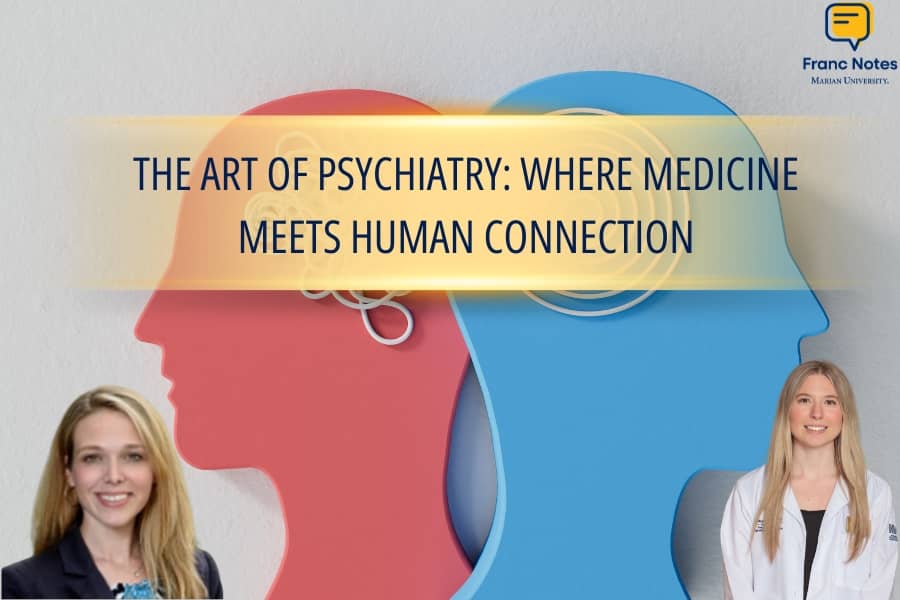
When it comes to choosing a medical specialty, the decision goes beyond just clinical interest; it also reflects the values students hold in their personal and professional lives. Psychiatry, in particular, presents a unique perspective within the field of medicine. From the first few days of medical school, we are taught to base our decision making in objective data. From labs, imaging, and measurable findings, we use them as our guides in diagnosing and treating patients. Psychiatry challenges that narrative. It asks us to look deeper beyond just numbers, shifting to patient stories, observation, and uncertainty.
I had the privilege of speaking to Elizabeth Cunningham, DO, psychiatry program director at Community Health in Indianapolis. Her journey into the field reflects the balance between medicine and human connection, offering insight into the importance of curiosity, empathy, and the art of understanding patients.
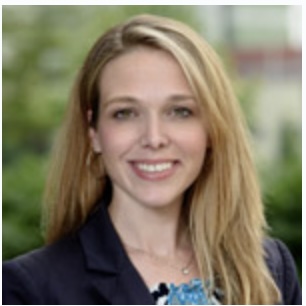 Dr. Cunningham’s path into psychiatry began when she graduated from A.T. Still University Kirksville College of Osteopathic Medicine and completed her psychiatry residency at Banner Good Samaritan Medical Center in Phoenix, Arizona. Like many medical students starting out, she was drawn to multiple different areas of medicine, even considering internal medicine at the beginning. However, psychiatry was the field she always seemed to return to. “I really liked the relationship building, the rapport building, and how it’s not formulaic,” she said.
After residency, Dr. Cunningham went on to complete her forensic psychiatry fellowship at the University of Rochester School of Medicine in Rochester, New York. Here, she specifically focused on the intersection of psychiatry and the legal system, including evaluating individuals who were preparing to reintegrate into society and working with complex populations such as sex offenders.
Eventually, she decided to come to Indiana, continuing her forensic work, which included courtroom testimony, psychiatric evaluations, and intensive outpatient programs. She was excited that these opportunities provided her the ability to work closely with patients for 8-10 weeks, combining group therapy and individual management to support their needs. This gave her the perfect balance between acute and longitudinal care, allowing her to form meaningful therapeutic relationships.
Her greatest career transition came shortly after returning from maternity leave with her third child. She was asked to help write an application for a new psychiatry residency, the current program at Community Health. While this may have been an overwhelming task for others, it was a perfect fit for Dr. Cunningham, combining her passion for both medicine and the legal system.
When asked about a typical day in the life of a psychiatrist, Dr. Cunningham described the field as “truly a mixed bag,” with a wide variety of lifestyles and versatility. In inpatient psychiatry, the day consists of rounding and patient evaluations. In other settings, like consult-liaison and private practice, the day can vary depending on the number of complex cases and consults. She specifically stated that in forensic psychiatry, patients can be seen in consultation or in a correctional facility setting, making the lifestyle more structured.
In residency, trainees are exposed to all aspects of psychiatry. From medication management to therapy-based work, inpatient and outpatient care, and even subspecialties, residents have the ability to explore these different areas before choosing their own path.
One aspect of psychiatry that is especially meaningful is the opportunity to work closely with marginalized and underserved communities. Dr. Cunningham emphasized that Community Health, as a residency program, like many others, recognizes psychiatry as a field deeply embedded within communities, understanding that various social factors can impact mental health.
She went on to mention how well psychiatry aligns with the osteopathic philosophy. With her background as a DO, she loves how psychiatry focuses not only on holistic care, but also on prevention and education. She truly emphasized the importance of what she calls work-life integration rather than work-life balance. As a program director, the well-being of residents is extremely important to her, and she encourages everyone to find something that can help them practice mindfulness. For her, this looks like teaching hot yoga on Fridays, a personal way that helps her unwind.
The biggest piece of advice Dr. Cunningham offered to students interested in the specialty is to get exposure as early and often as possible. She specifically mentioned that finding a mentor in the field can help with both guidance and support throughout the uncertainty of medical school. As the field is becoming increasingly competitive, she emphasized the importance of not only strong academics, but a well-rounded application engaging with communities and scholarly work. Beyond these metrics, she also stressed the importance of having the core qualities of empathy and curiosity, as they are the foundation of psychiatry.
As our conversation came to a close, she mentioned the universal experience that every single medical student goes through: imposter syndrome. Her message echoed that while feelings of anxiety, doubt, and the need to constantly prove yourself will always surface, it is important to trust that you are right where you need to be on your journey.
 Sabrina Andrei is a second-year medical student at the Marian University Wood College of Osteopathic Medicine. With a background in neuroscience from the University of Michigan, she has strong interests in psychiatry, global health, education, and holistic, patient-centered care. Sabrina is passionate about bridging gaps in mental health access and advocating for culturally competent care on a global scale.
Discover the voices of Marian University's health professions students through "Franc Notes", a vibrant, student-led blog that embodies our Franciscan commitment to community, reflection, and compassionate service. Inspired by the rhythm of "SOAP notes," it features weekly insights—from "DO Diaries" interviews with physicians to summer reflections and program spotlights—fostering collaboration across disciplines."