Locations
Resource Links



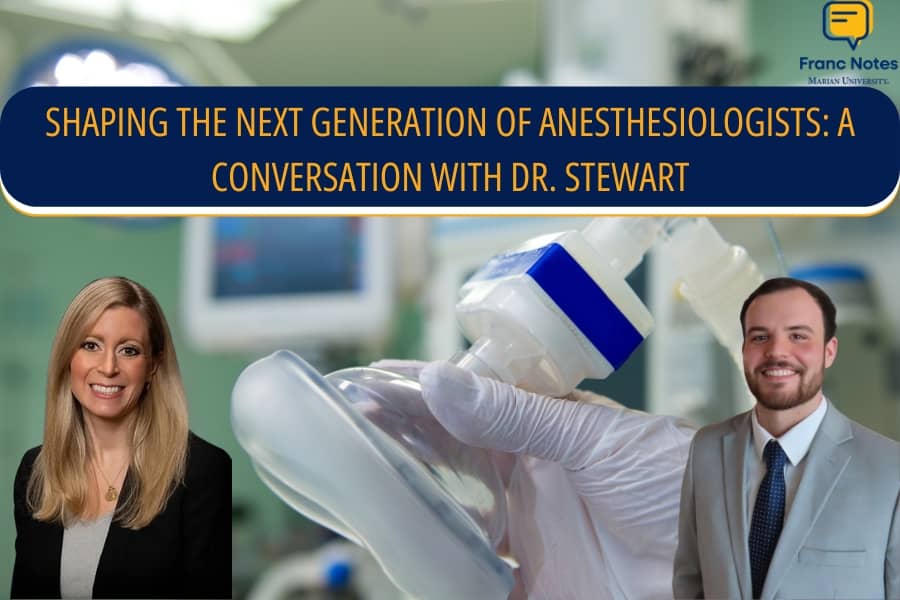
Jennifer L. Stewart, DO, program director of the Anesthesiology Residency at Indiana University School of Medicine, shared her path to medicine and her approach to training future physicians with me. Hailing from Carmel, Indiana, she forged her path to becoming an attending anesthesiologist by adapting, persevering, and overcoming challenges through reflection, dedication, and hard work.
Dr. Stewart was exposed to medicine early in life, as her father was an ophthalmologist and her stepmother was an anesthesiologist. Through their collective experiences, she witnessed firsthand the demands of working in the profession. This perspective granted her an honest view of the reality of medicine: meaningful yet difficult work in a field that demands prioritizing patient care over personal comfort.
Dr. Stewart had long considered becoming a physician. However, during her pre-medical coursework, she was unsure whether medicine was her true calling. This led her to take a short break from school to deliberate before ultimately concluding that medicine was her passion.
Dr. Stewart's path then took her to Lake Erie College of Medicine in Bradenton, Florida. She cited her interest in osteopathic philosophy, specifically its emphasis on holistic care and preventive measures. She continues to carry those principles into her work as an attending physician and into her personal life, where they influence how she views health and patient care.
With her eyes set on graduation, Dr. Stewart was interested in several fields before eventually deciding on anesthesia. She enjoyed the science of medicine in its entirety but felt particularly drawn to internal medicine, emergency medicine, ophthalmology, and psychiatry. Ultimately, the variety, environment, and procedural nature of anesthesia she experienced during clinical rotations made her decision clear.
Dr. Stewart returned to Indiana to complete her anesthesiology residency at Indiana University School of Medicine. Indiana was important to her. That was where her family was, and she knew it was where she wanted to practice in the long term.
During her time as an osteopath-in-training in a relatively allopathic field, she felt she had to prove herself. This was an obstacle she embraced, working hard to become a chief resident.
The challenges she faced pushed her out of her comfort zone, taking on roles she never expected. They steered her toward involvement in academic medicine and program leadership, where she discovered her enjoyment of trainee advocacy and of shaping her future colleagues.
Dr. Stewart's hardships ultimately contributed to her growth and achievements. Drawing on those experiences, she advises trainees to push beyond their comfort zones and embrace failure as an opportunity for true learning and growth. She also emphasized the importance of perspective. While physicians may encounter difficult days in the hospital, the patients on the operating table face something far more serious.
We also discussed what makes IU's anesthesiology residency program unique. A defining strength of the program is its broad clinical exposure. Residents are in the operating room early in their training, rotating through multiple hospitals, each with distinct patient populations, cases, and equipment.
This enables trainees to take that valuable experience into their professional careers, equipped to handle a wide range of clinical cases beyond residency. The program utilizes early, hands-on clinical work paired with progressive resident autonomy to mold trainees into confident physicians.
As residents advance through the program, they take on increasing responsibility while remaining under appropriate attending supervision. Additionally, Dr. Stewart highlighted the importance of resident feedback. Resident feedback plays a significant role in shaping the program's direction, including adjustments to call schedules and an emphasis on resident well-being, all while balancing patient care and trainee education.
We also discussed what makes a strong applicant for anesthesiology residency. While board exam and didactic performance are certainly of great importance, they are only part of the picture.
Significant value is placed on clinical rotations across all specialties. These allow students to evaluate a program while demonstrating engagement and teamwork. Student doctors need to exhibit characteristics that indicate they are willing to work hard and learn while incorporating feedback and practicing professionalism.
Letters of recommendation and the personal statement should reflect strong character, personal growth, and a genuine interest in anesthesiology.
Throughout the conversation, several consistent themes emerged from Dr. Stewart's philosophy. Medicine as a whole requires dedication to a field that asks for significant responsibility and sacrifice. Perspective and a positive attitude are crucial even on the most challenging days because, above all, physicians are dedicated to caring for patients who may face far greater uncertainty.
Her perspective reflects the true privilege of working as a physician: the opportunity to care for individuals in their most vulnerable moments while working diligently to improve patient outcomes and serve the broader community.
Discover the voices of Marian University's health professions students through "Franc Notes", a vibrant, student-led blog that embodies our Franciscan commitment to community, reflection, and compassionate service. Inspired by the rhythm of "SOAP notes," it features weekly insights—from "DO Diaries" interviews with physicians to summer reflections and program spotlights—fostering collaboration across disciplines."