Locations
Resource Links



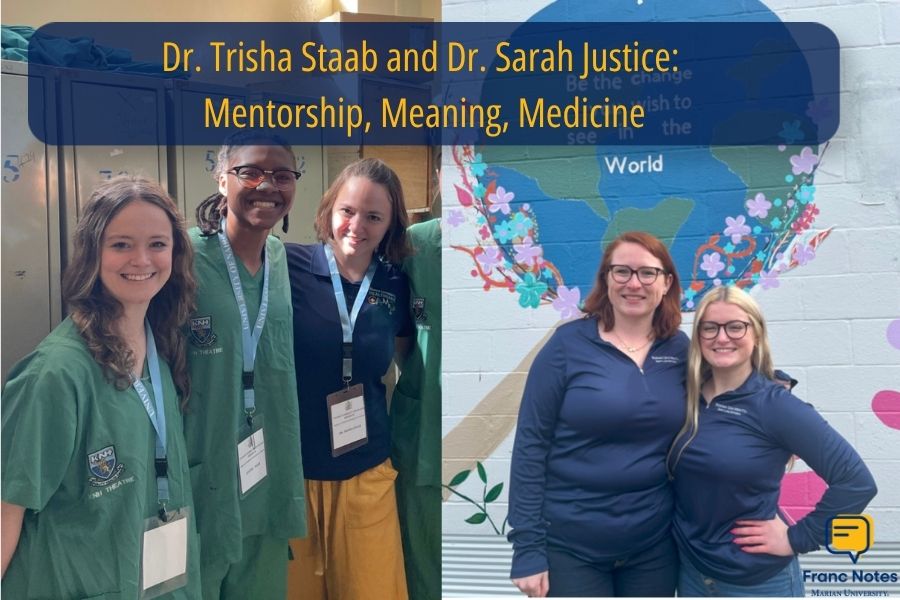
The path toward medicine, research, or healthcare can feel very overwhelming. Between difficult science courses, research opportunities, shadowing hours, extracurricular activities, and long-term career planning, college students can easily feel pressured by the assumption that they need to do everything. This is why having a strong advisor can be extremely beneficial, helping guide students toward success. We interviewed Dr. Sarah Justice and Dr. Trisha Staab, who are advisors within the Biology Department and Saint Luke Scholar program. Both advisors have played an incredible role in mentoring students, offering not only academic guidance but also genuine support, encouragement, and insight to help students navigate the demanding journey toward careers in medicine and healthcare. This interview shed light on valuable advice for college students interested in pre-med and graduate pathways.
One of the strongest themes from both interviews was the importance of discovering a personal mission. According to Dr. Justice, students should identify what genuinely brings them joy and excitement, then align their coursework, extracurriculars, and experiences around that theme. Many people overlook this, as they feel the need to “do everything.” Rather than chasing activities simply because they “look good,” students should focus on experiences that reflect their passions and future goals.
For example, students interested in pediatrics might pursue volunteer work with children or participate in organizations that serve younger populations. This not only creates a stronger application but also helps students confirm whether their interests truly align with their future careers.
Similarly, Dr. Staab emphasized that admissions committees want applicants to tell a cohesive story. One’s college experiences should flow together to tell that unique story. Medical schools and graduate programs are not simply looking for students who check boxes; they are looking for students who demonstrate purpose and commitment through the experiences they choose.
Another recurring topic was time management. Both professors noted that one of the most common mistakes students make is overcommitting themselves. Many pre-med students attempt to balance difficult coursework, research, leadership positions, volunteering, employment, and MCAT preparation simultaneously. While ambition is important for students pursuing such a demanding path, it can also lead to poor mental health and burnout. Having a healthy balance is key to sustaining energy throughout such a long journey.
Dr. Justice explained that students frequently pursue too many “great opportunities” without considering whether those opportunities actually fit their long-term goals. Dr. Staab similarly noted that there are only twenty-four hours in a day, making prioritization essential. Students do not need to excel in every possible category; instead, they should aim to become distinctive in a few meaningful areas while maintaining balance elsewhere.
Both interviews also stressed the importance of mental health. Sleep and stress management are not optional luxuries but necessary components of long-term success. Sleep, in particular, is often overlooked, with many students believing they can “make up” for a sleepless night by sleeping in the next day. However, consistently sacrificing sleep can negatively affect memory, focus, academic performance, and overall health over time. Without adequate sleep and stress management, even the strongest students can struggle academically and emotionally.
Research experience emerged as one of the most important factors for students interested in PhD programs. Dr. Justice stated directly that students applying for PhD programs are generally not accepted without research experience. Graduate programs expect students to enter with an understanding of laboratory work and scientific inquiry.
However, research is not solely about technical skills. According to Dr. Justice and Dr. Staab, research teaches resilience and problem-solving, qualities that extend far beyond the laboratory. Experiments fail frequently, and students must learn to adapt and think critically in the face of uncertainty. These qualities are essential not only in graduate school but also in medicine and healthcare research.
Dr. Staab noted that the relative emphasis placed on research and clinical experience may vary among medical schools and programs, making it important for students to understand the priorities of the institutions to which they plan to apply. Still, both professors stressed that regardless of pathway, students should seek meaningful experiences that help them understand both science and patient care more deeply.
One of the most valuable insights from Dr. Justice was the importance of mentorship. As students, we often focus too much on finding distinguished labs or impressive opportunities, but the quality of the mentor can matter more than the specific research topic itself. A good mentor provides guidance, support, and long-term professional development.
Importantly, students may need multiple mentors throughout college and beyond. Different people can offer advice about research, academics, medicine, work-life balance, or personal growth. Because every student’s identity and experiences are unique and complex, no single mentor can fulfill every role. This idea reflects a broader lesson: successful students build support systems rather than trying to navigate difficult paths entirely by themselves.
While strong STEM preparation is crucial, Dr. Staab emphasized that medical schools also want empathetic, ethical, and well-rounded individuals. Admissions committees not only evaluate whether students are capable of mastering biology or chemistry but also whether they can work compassionately with patients and understand complex ethical situations.
Courses like ethics, philosophy, and psychology help broaden a student's perspective and provide a better understanding of the human side of medicine. Exposure to diverse experiences and viewpoints can also shape a student into a stronger future clinician or researcher. This focus on humanity is increasingly important in modern healthcare, where communication, empathy, and cultural understanding are as essential as scientific knowledge.
The most reassuring takeaway was that students do not need perfect academic journeys to succeed. Many students struggle initially with their courses or discover their career interests later in college. But according to Dr. Staab, admissions committees often value upward academic trends and evidence of growth rather than expecting perfection right from the start.
Gap years, or perhaps better described as “growth years,” were discussed as positive opportunities rather than setbacks. During these years, students can gain research experience, clinical exposure, and clarity about their goals. Both professors also emphasized the importance of adaptability. Science and medicine are constantly evolving, especially with the rapid advancement of technologies like artificial intelligence. Students entering STEM today must be willing to continuously learn and rethink what they know as new discoveries emerge.
The journey toward medical school or graduate education is not defined by perfection. Instead, it is shaped by intentional growth, resilience, and self-awareness. Students who succeed are often the ones who learn how to balance ambition with well-being while remaining flexible as they grow.
Ultimately, both Dr. Justice and Dr. Staab highlighted the same core idea: becoming a successful physician or scientist is not just about building a strong résumé; it is about becoming a thoughtful, adaptable, and compassionate person prepared to contribute meaningfully to science, medicine, and society.
 My name is Shreyas Bulusu, and I am a Saint Luke Scholar freshman at Marian University. I am pursuing a double major in Biology and Mathematics under the pre-med track, as well as pursuing my Master’s in Biomedical Sciences. It’s my dream to become a physician, and I am passionate about conducting research in medical imaging or computational cardiovascular science. I also love playing soccer and badminton or hanging out with friends!
 I’m Gabriel Mendez, a freshman at Marian University. I am pursuing a major in Biology and a minor in Computer Science. My goal is to have a career as a bioinformatician, where I aim to analyze and interpret large-scale biological data, such as DNA sequences and protein structures. I also love nature and have my own garden where I’ve planted fruits and vegetables.
Discover the voices of Marian University's health professions students through "Franc Notes", a vibrant, student-led blog that embodies our Franciscan commitment to community, reflection, and compassionate service. Inspired by the rhythm of "SOAP notes," it features weekly insights—from "DO Diaries" interviews with physicians to summer reflections and program spotlights—fostering collaboration across disciplines."