


Franciscan Values Art Walk • Fall
Peace & Justice
Welcome to this self-guided walk across campus.
This self-guided experience invites you to explore selected artworks across campus that reflect the Franciscan value of Peace & Justice. You will walk between buildings, engage with art from the Marian University permanent art collection, and consider how the concepts of peace and justice are illustrated in these works of art.
Embracing peace and justice across our communities and as an individual right is not only a central Franciscan value but also an international ideal. Each year, the International Day of Peace is observed around the world on September 21st. A unanimous United Nations resolution established this day of peace in 1981. Peace Day provides a globally shared date for all humanity to commit to peace above all differences. The idea of peace, as part of Marian University’s Franciscan sponsorship values, is wedded to the notion of justice. Justice simply means that communities and individuals should experience the fair and good regularly operating in their lives. With the Franciscan values of peace and justice in mind, let’s take a walk visiting artists’ works which, from differing perspectives, challenge viewers to think critically about the concepts of peace, justice, the fair, and the good.
These art walks are dedicated to the sisters of Marian College whose spirit inspires their content: Sister Stella Gampfer, Sister Pat Connor, Sister Norma Rocklage, and Sister Monica Zore.
Jamie Higgs, Ph.D. Associate Professor of Art History and Curator of the Marian University Permanent Art Collection
Next: Walk to Marian Hall (Stop 1)
Walking to Marian Hall
Stop 1 • Point of Departure
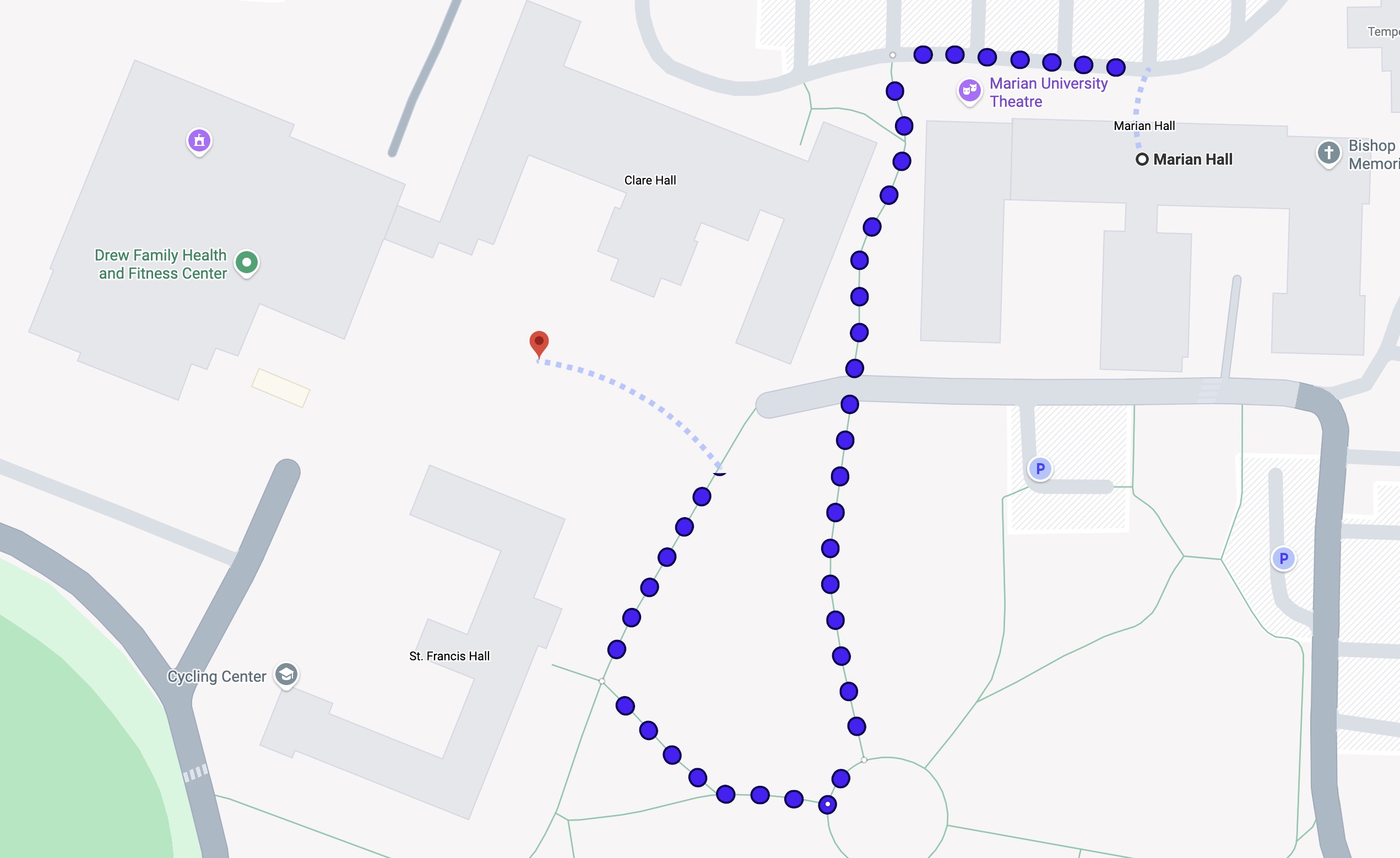
Exit Alumni Hall and walk across the main quad toward Marian Hall (approx. 4–5 min). Enter through the door at the theater end of the building — the works are arranged in order from that entrance.
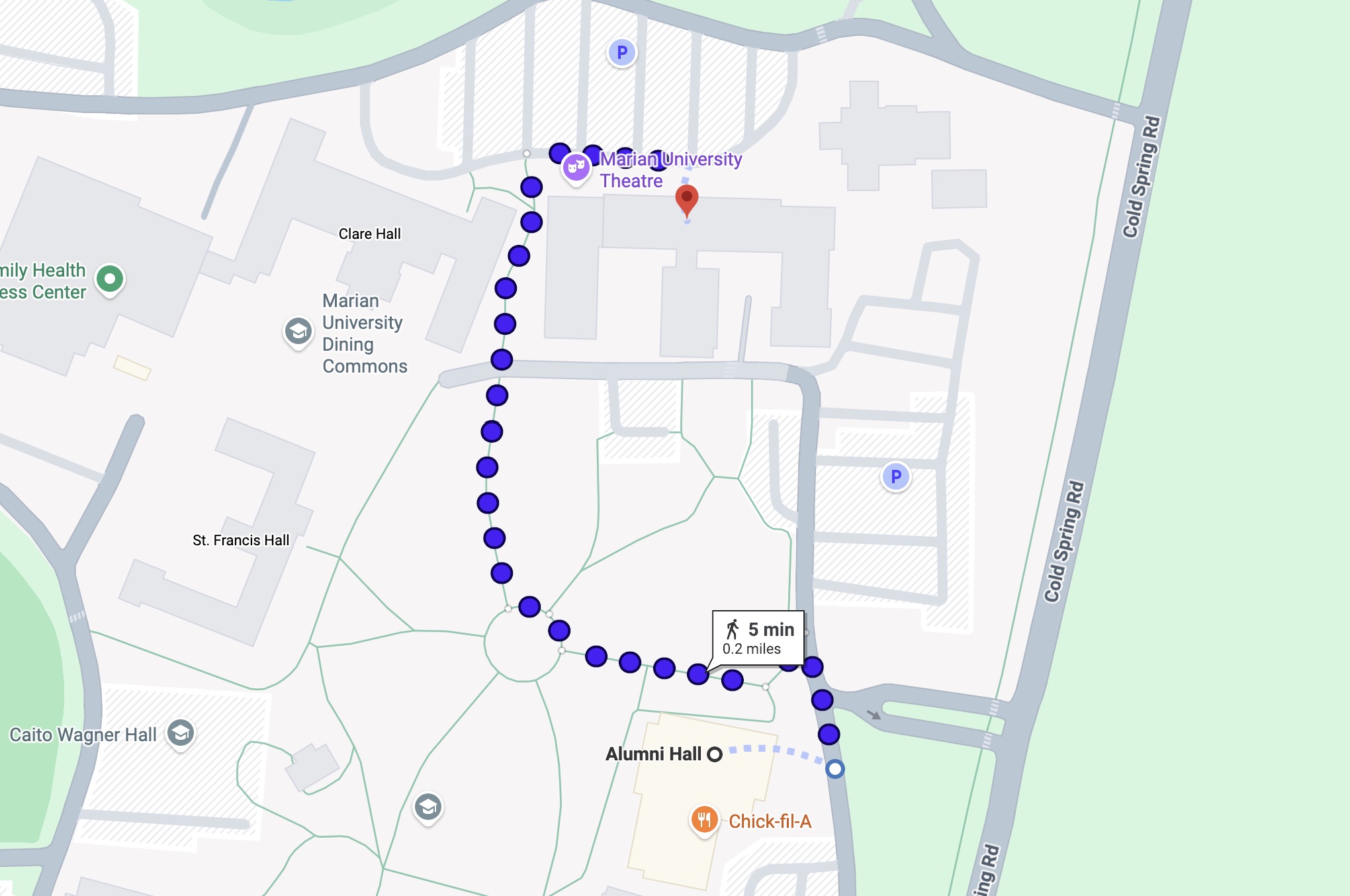
Consider how moving from one campus space into another can be an opportunity to notice beauty, history, and the call to justice around us.
Rooms 110, 111 & Academic Conference Room (1st floor) • Siqueiros: 1st floor, east end
Richmond Group Landscapes
5 featured worksWhile landscape may appear inviting and immediately accessible, its history is complicated and rooted in a search for peace and justice. From the Protestant Reformation to America’s national identity, these works, by nineteenth and twentieth-century Richmond, Indiana artists, embody that history as they continued their own searches for peace, justice, the fair, and the good by putting paint to canvas. Our Richmond Group of landscape paintings is currently housed in Marian Hall, Rooms 110, 111, and the Academic Conference Room. Feel free to ask to see the specific works highlighted below if the spaces happen to be locked. We do love to share our art.
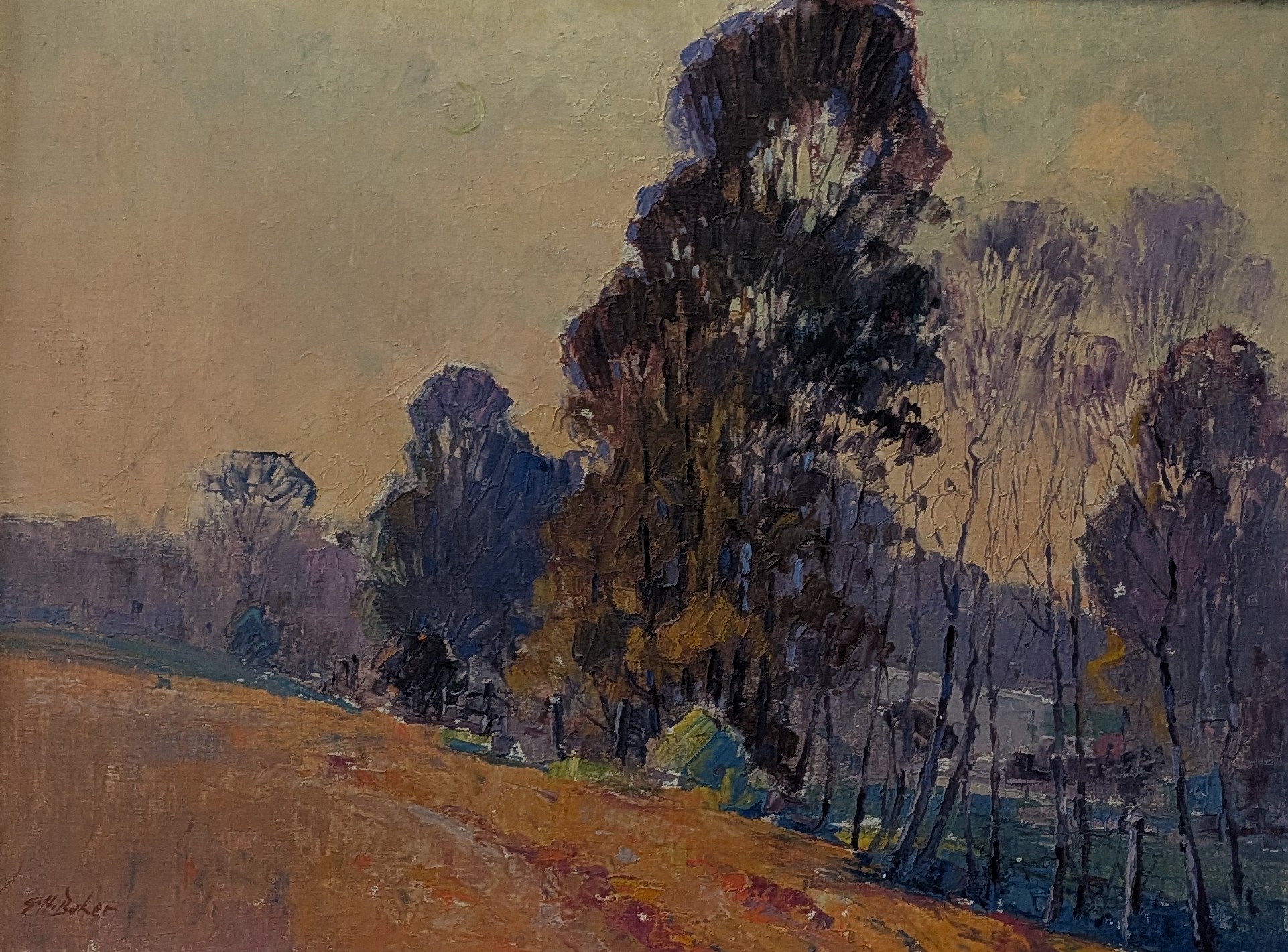
George Baker (1878–1943)
George Baker (1878–1943) was known for his landscapes of all seasons and moods. He was considered a brilliant colorist exemplified by Gentle Hillside. Notice how color approximates reality as the artist renders the hazy purple thicket of Gentle Hillside. This unconventional use of color was often critiqued within the genre of landscape painting. However, since the time of Fauvism (1905–1908), artists have been using color arbitrarily to explore emotions over reason, subjective experience over objective reality. Baker’s statement “I don’t paint nature the way it is. I paint nature the way I wish it was,” recorded in his Art Notes, reveals an artist who uses his art, color and conception, to defy expectations and authority in his search for what feels right and good in the pursuit of his personal art making.
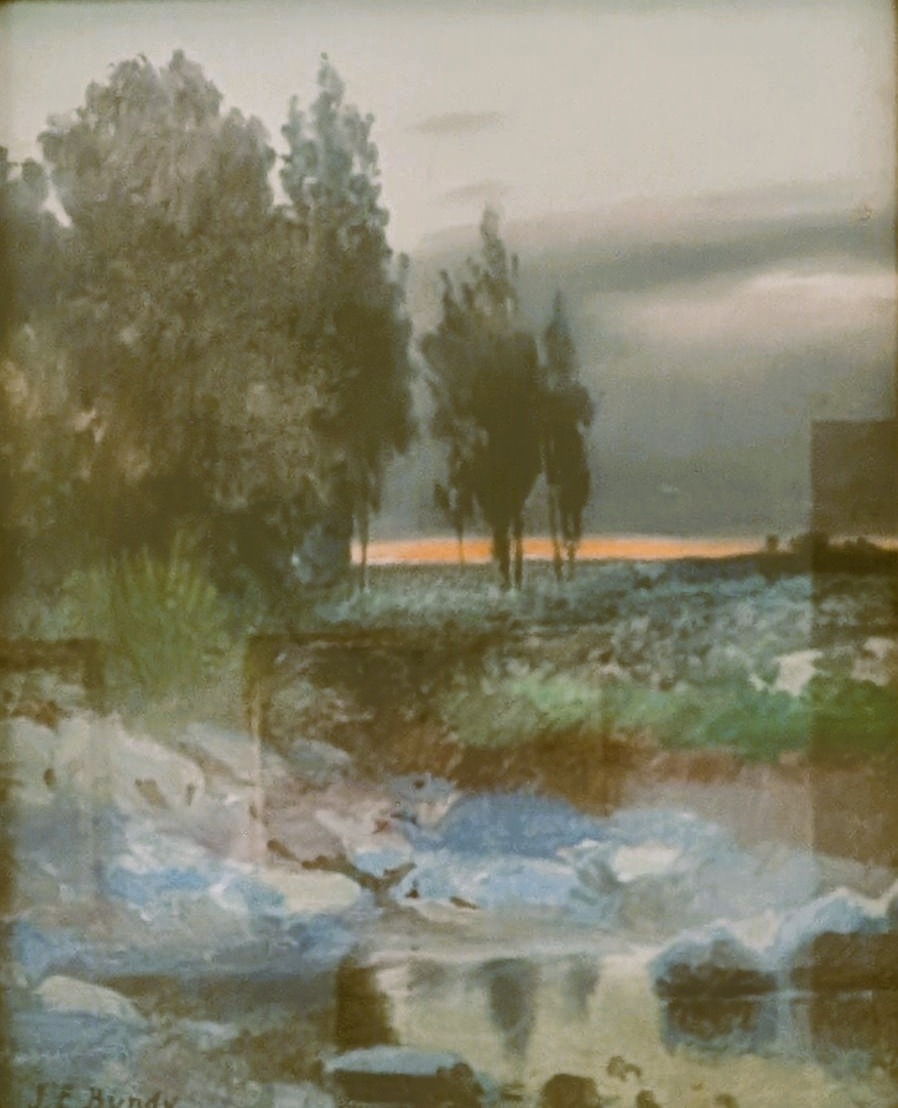
John Bundy (1853–1933)
John Bundy (1853–1933) was devoted to peaceful woodland scenes particularly those with beech trees. Bundy is known to have stated: “I was first attracted to the beech because it is so numerous here in Indiana. I think the beech right here in Wayne County is the finest I have ever seen anywhere.” Bundy was so captivated by trees, he painted one particular tree twenty times, that is until it was felled. In response to that injustice to the environment humans were God given to steward, he stated “I never thought anyone would have the heart to cut this beautiful tree or I would have gladly paid them to let it stand, at least as long as I lived.” Consider our Bundy works such as Evening Landscape and how he creates a fleeting wistful mood using only an unassuming landscape populated by those captivating trees. Is it the injustice of the loss of this natural beauty to human hands he wants us to feel, is it longing, or is it something else? I will leave that to you to reflect upon.
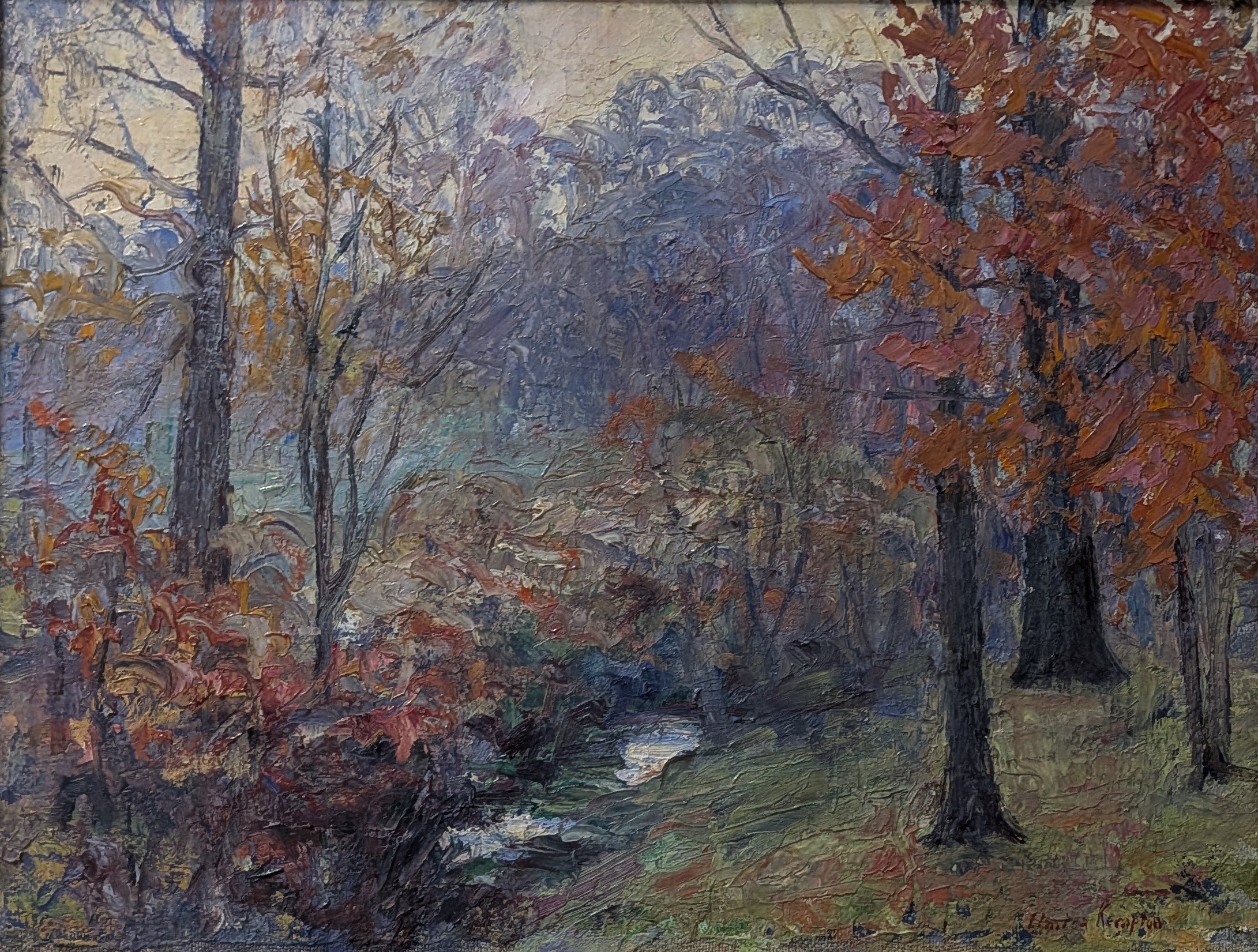
Elmira Kempton (1892–1971)
Elmira Kempton’s (1892–1971) Late Autumn in a Wood is an example of plein-air painting, meaning she painted outdoors, as did most nineteenth- and twentieth-century landscape painters. This method of painting outdoors might seem an obvious approach to landscape painting, but when it was first practiced by the French Impressionists in the nineteenth century it was scandalous. This unconventional method combined with her gender, as females were still unwelcomed in the art world at this time, makes Kempton an undeniable rule breaker in her personal search for justice to launch an artistic career as a female landscape painter.
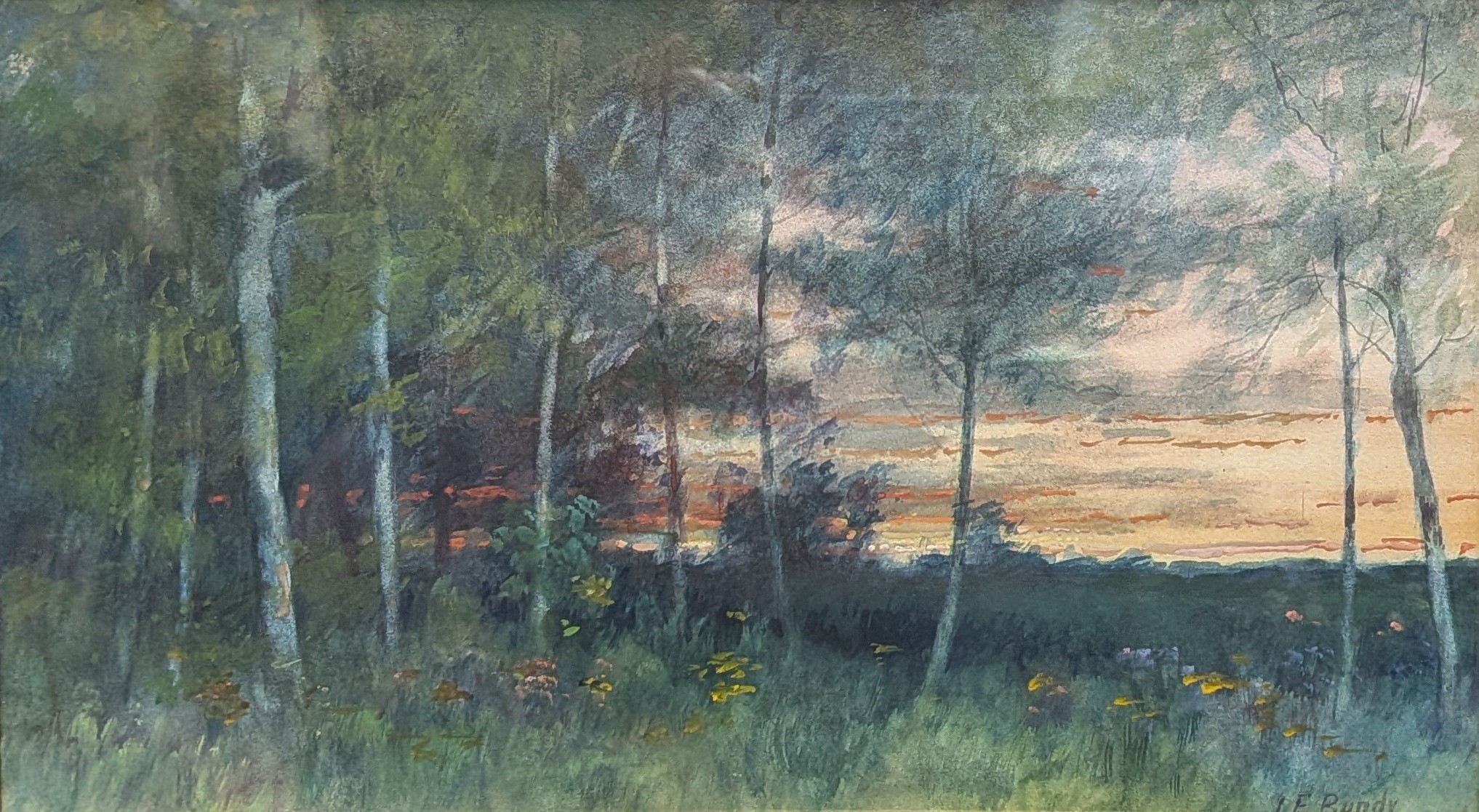
John Bundy (1853–1933)
John Bundy (1853–1933) was devoted to peaceful woodland scenes particularly those with beech trees. Bundy is known to have stated: “I was first attracted to the beech because it is so numerous here in Indiana. I think the beech right here in Wayne County is the finest I have ever seen anywhere.” In addition to referencing the peaceful woodland setting of the beech tree, this sentiment also reflects the landscape being used as a source of pride. Art historian, Mary Burnet concurs in her book Art and Artists of Indiana when she notes that “Bundy’s pictures of beech woods have attained a distinction that is individual, preserving a feature of Indiana’s natural beauty that is rapidly passing with the inroads of civilization.” Consider our Bundy works such as Dusk and how he creates a fleeting wistful mood using only an unassuming landscape populated by those captivating trees. Is it the injustice of the loss of this natural beauty to the inroads of civilization (i.e. human hands) he wants us to feel, is it longing, or is it something else? I will leave that to you to reflect upon.
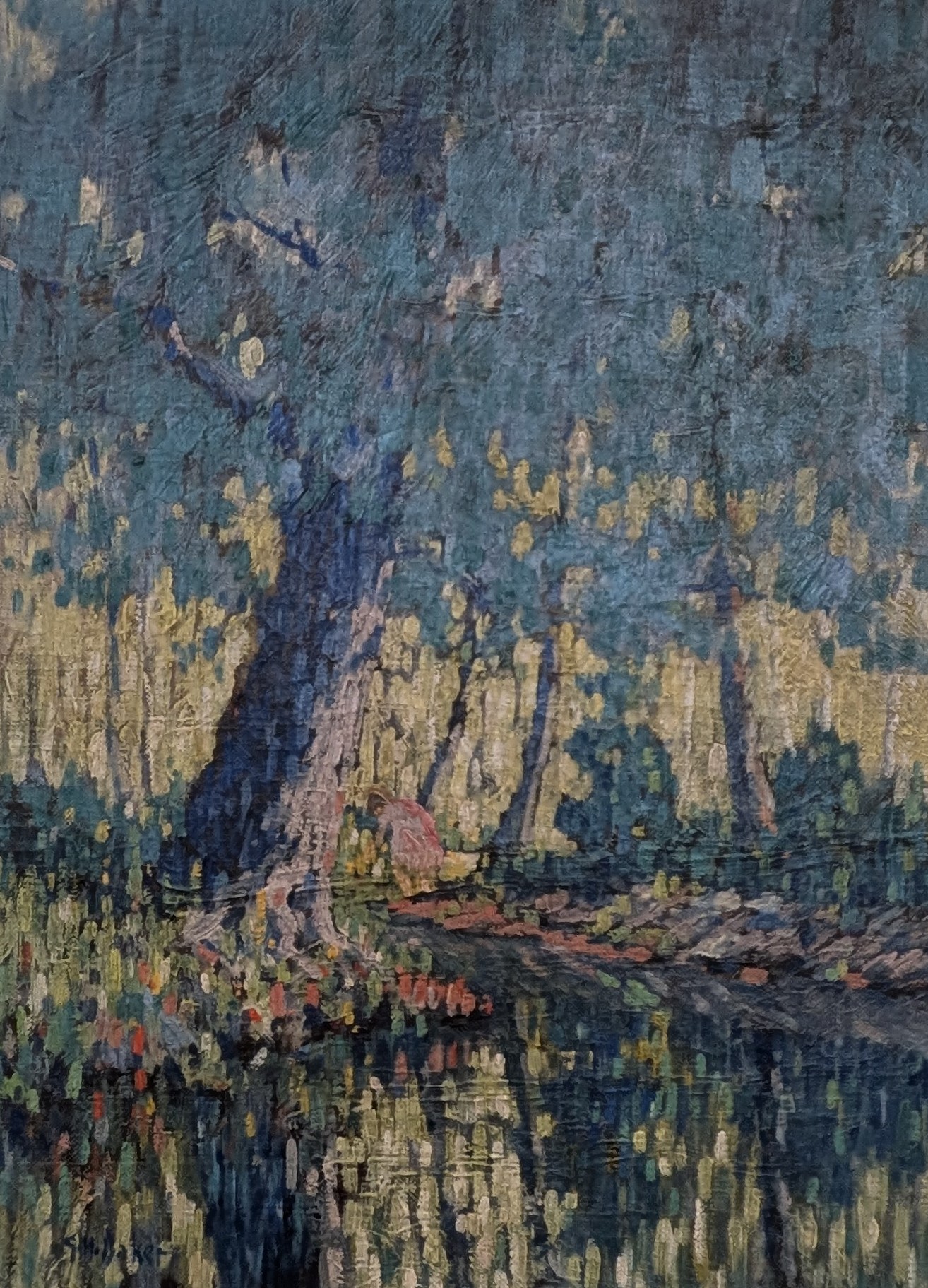
George Baker (1878–1943)
George Baker (1878–1943) was known for his landscapes of all seasons and moods. He was considered a brilliant colorist exemplified by Moonlight Blue Stream. Notice how color approximates reality as the artist renders the blue green tree of Moonlight Blue Stream. This unconventional use of color was often critiqued within the genre of landscape painting. However, since the time of Fauvism (1905–1908), artists have been using color arbitrarily to explore emotions over reason, subjective experience over objective reality. Baker’s statement “when one is inspired, he does not think about or even care about the RULES,” recorded in his Art Notes, reveals an artist who uses his art, color and conception, to defy norms and authority in his search for what feels right and good in the pursuit of his personal art making.
What other elements of these three works of art or other Richmond Group pieces (in terms of subject, mood, style, or technique) illustrate any of the concepts of peace, justice, the fair, or the good?
Select Bibliography
Jamie Higgs, Ph.D. Associate Professor of Art History and Curator of the Marian University Permanent Art Collection
Siqueiros Collection
19 lithographsFirst floor, east end • Mexican Suite & Mountain Suite
Located in Marian Hall on the first floor, east end, are nineteen lithographs by the Mexican artist David Alfaro Siqueiros (1896–1974). Siqueiros was a member of los tres grandes, a group of Mexican mural artists which included Diego Rivera and José Clemente Orozco. These three artists were to early twentieth-century Mexican art what Leonardo de Vinci, Michelangelo, and Raphael were to sixteenth-century Italian art.
The Mexican muralist movement represented one of the most powerful achievements in public art during the twentieth century. The movement tried to capture, in visual images, the idealistic rethinking of society that occurred in conjunction with the Mexican Revolution and the political turmoil of the 1920s. The monumental mural projects, undertaken by these three artists, are found throughout Mexico and the United States in palaces, schools, universities, workers’ halls, factories, and public parks. Generally, the murals dramatize and validate the history of Mexico’s native people and draw attention to social concerns as they invite viewers to consider challenges to peace and justice undermining in the lives of the Mexican people.
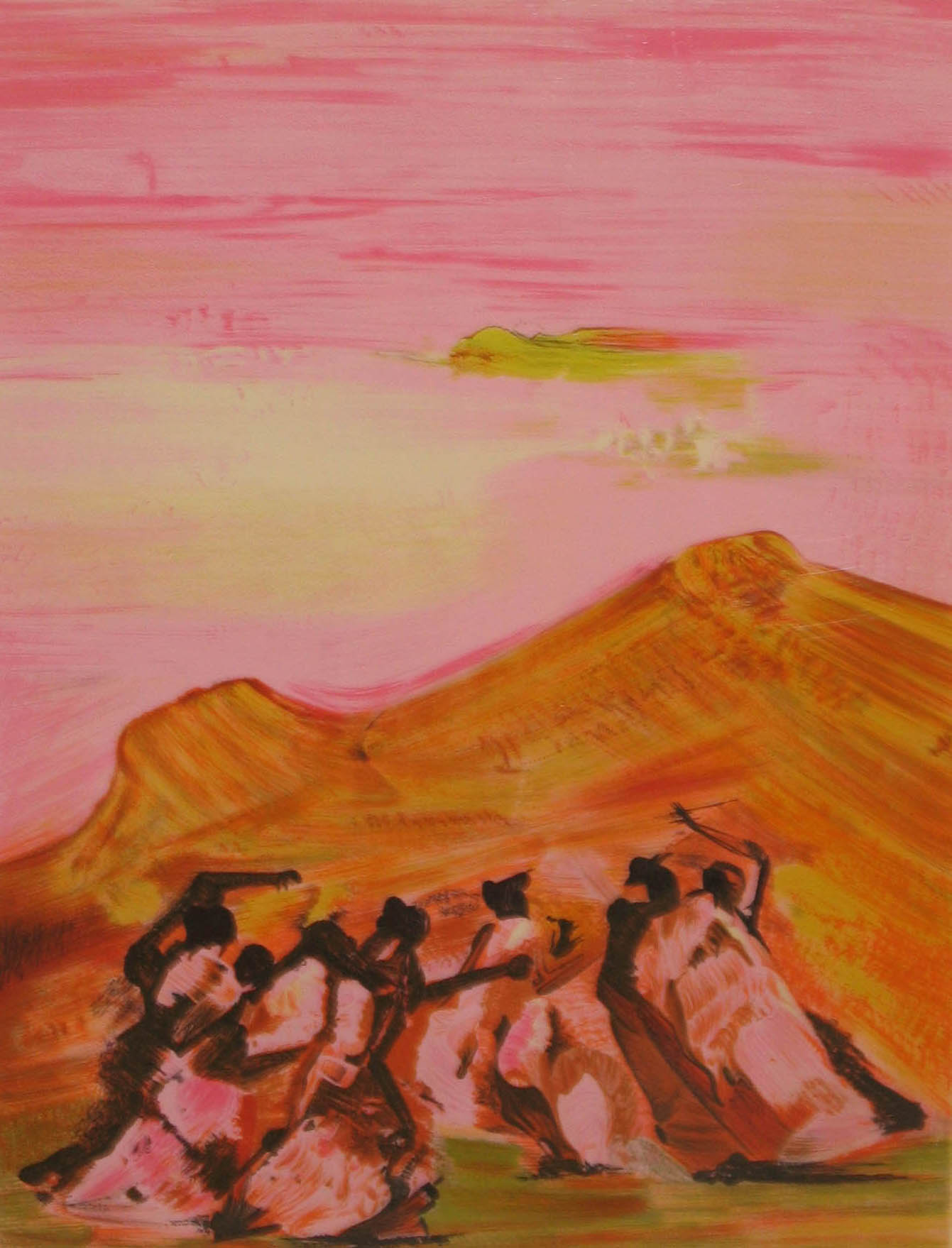
David Alfaro Siqueiros • Mexican Suite (1968)
Mountain Dances from the Mexican Suite illustrates a group of figures clothed in carnation pink drapery celebrating their lives and traditions through dance. The pink of their drapery contrasts with the ochre color of the mountains that dominate the middle ground. In the background, the same carnation pink is re-enlivened by way of streaks in the sky. With the repeated use of the carnation pink color, Siqueiros achieves a connection between the figures and the natural world along with visual harmony from the bottom to the top of the work. Both the relationship created between elements of the subjects in this work and the visual harmony via the color palette bring me a feeling of peace and harmony that all is right with the world through connection.
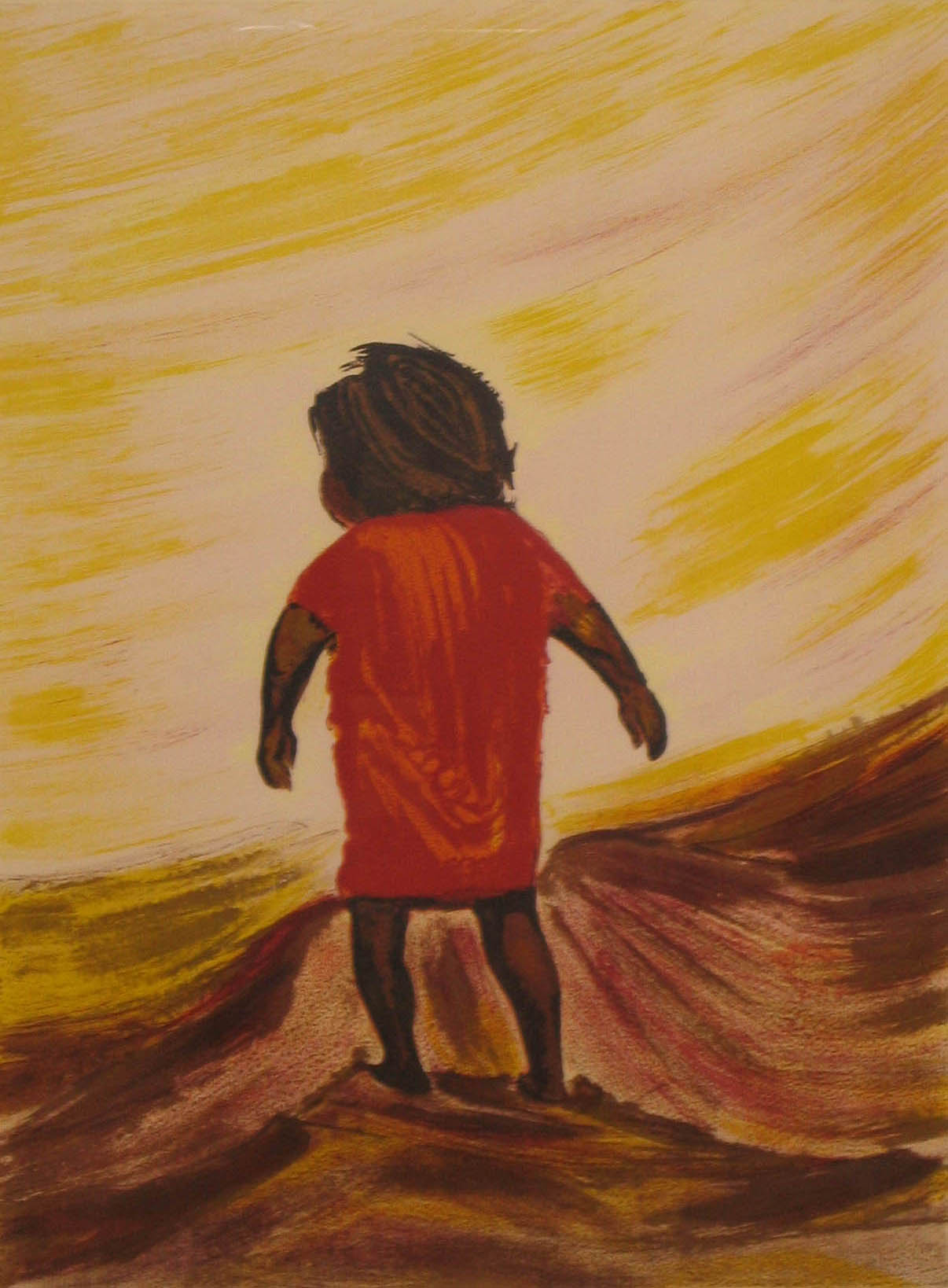
David Alfaro Siqueiros • Mountain Suite (1969)
Jesus Will Be a Saint from the Mountain Suite foregrounds a toddler dressed in an orange tunic standing on an earthy brown ground looking towards a yellow, light-filled sky. The symbolism is rich. Jesus, becoming human, became part of this earthy, brown world while also being divine, with a sacred destiny, alluded to by the yellow light of the sky. His birth, death, and resurrection connect the earth and heavens and bring peace to those who follow his principal teachings to love God and love your neighbor.
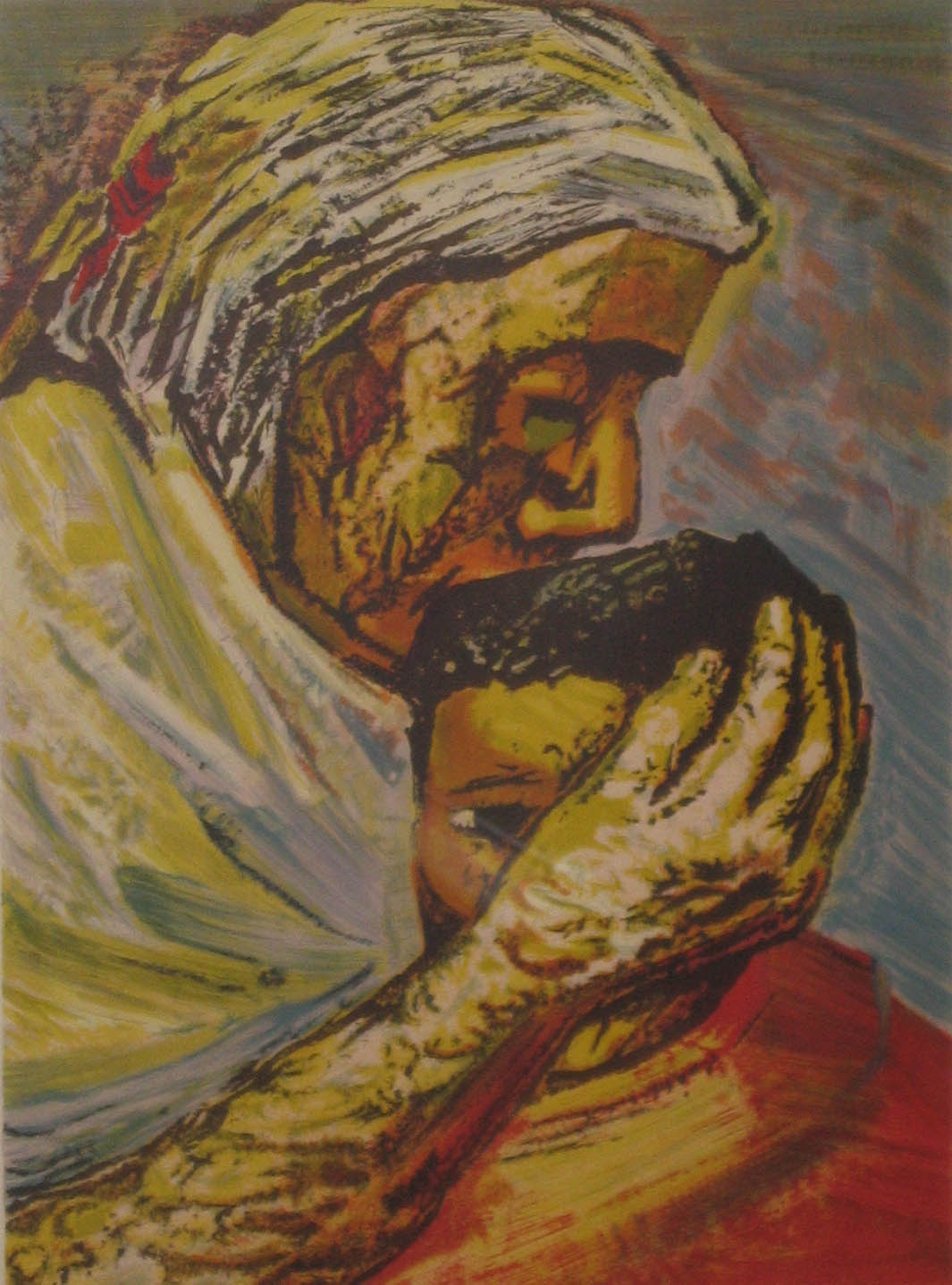
David Alfaro Siqueiros • Mexican Suite (1968)
Mother Shielding Child from the Mexican Suite illustrates a gray-haired, aging mother draped in white offering comfort to a child by way of her enfolding embrace and forehead kiss. The setting for this embrace is a blue grey background. As it relates to peace, this image might be our most accessible as nothing brings more peace to a child than a mother’s love offered through a simple hug just like this one.
What other elements of these three works of art (in terms of subject, mood, style, or technique) illustrate any of the concepts of peace, justice, the fair, or the good?
Select Bibliography
Jamie Higgs, Ph.D. Associate Professor of Art History and Curator of the Marian University Permanent Art Collection
Walking to Student Dining Commons
Approximately 5-minute walk
From Marian Hall, walk east toward the Student Dining Commons. Enter from the patio — the Reading Room is the first door on the right.
Reflect on how the Richmond Group landscapes and Siqueiros’ works connect to themes of peace, justice, the fair, and the good.
Reading Room (enter from patio, first door on right)
Father William Stang African Art Collection
The works displayed here belong to the Father William Stang African Art Collection, donated to Marian University in 2017. The pieces represent twenty-eight cultures from across Africa including such groups as the Ashante, Bakota, Baule, Benin, Dogon, Fang, Guro, Kuba, Mossi, Songe, Warega, and Yoruba. Generally, as related to peace and justice, we aim for these works to celebrate cultural diversity and the richness of African artistic traditions.
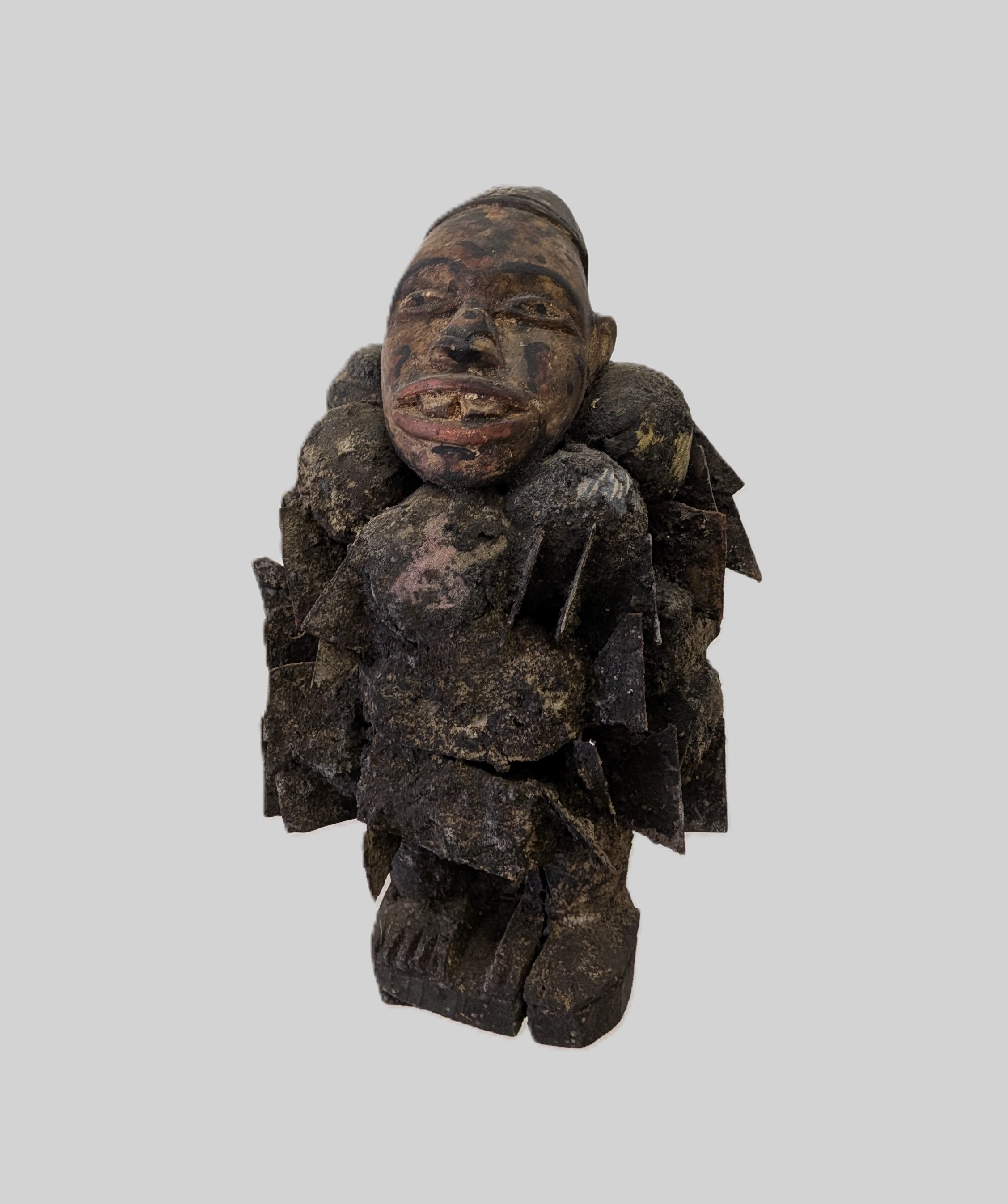
Congo
The Congo Effigy Figure appears a bit alarming with its roughly marred and textured surface resulting from nails and blades being embedded into the work. In most cases, each embedded object represents a prayer or vow of an individual or of the larger community. And so, this work, a power figure, is never complete but always evolves as it carries on-going petitions to the unseen spirits to ensure peace, harmony, or justice depending on the petition.
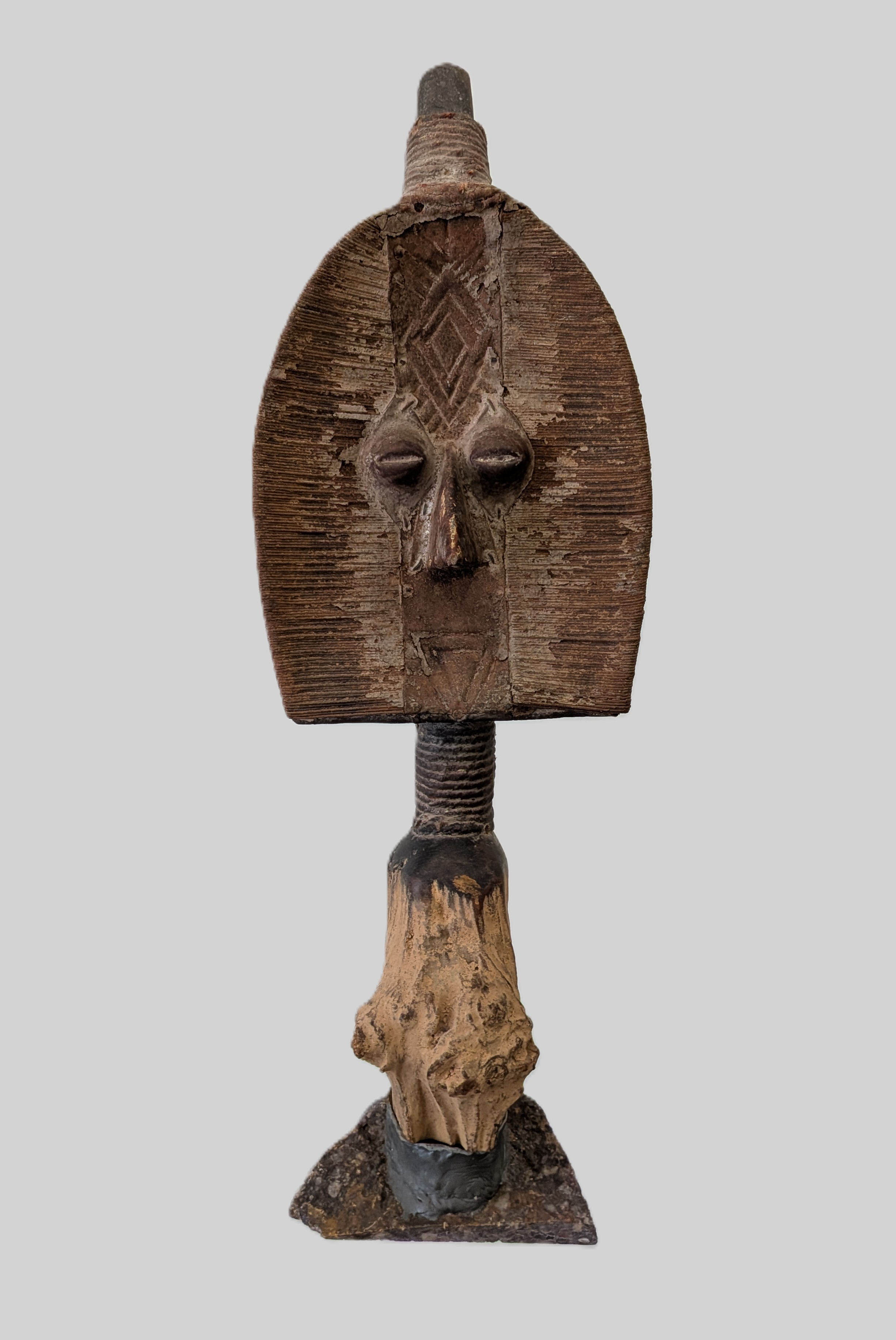
Gabon and Congo • Bakota people
The Bakota (Gabon and Congo) Bwiiti Reliquary Figure functioned as a guardian protecting the bones of the deceased. Tradition teaches that the spirits of the ancestors can affect the lives of the living. So, from birth to the everyday and into death, art is intertwined with life, too powerful to be ignored ensuring peace and harmony as the two worlds intersect.
Ghana • Ashanti people
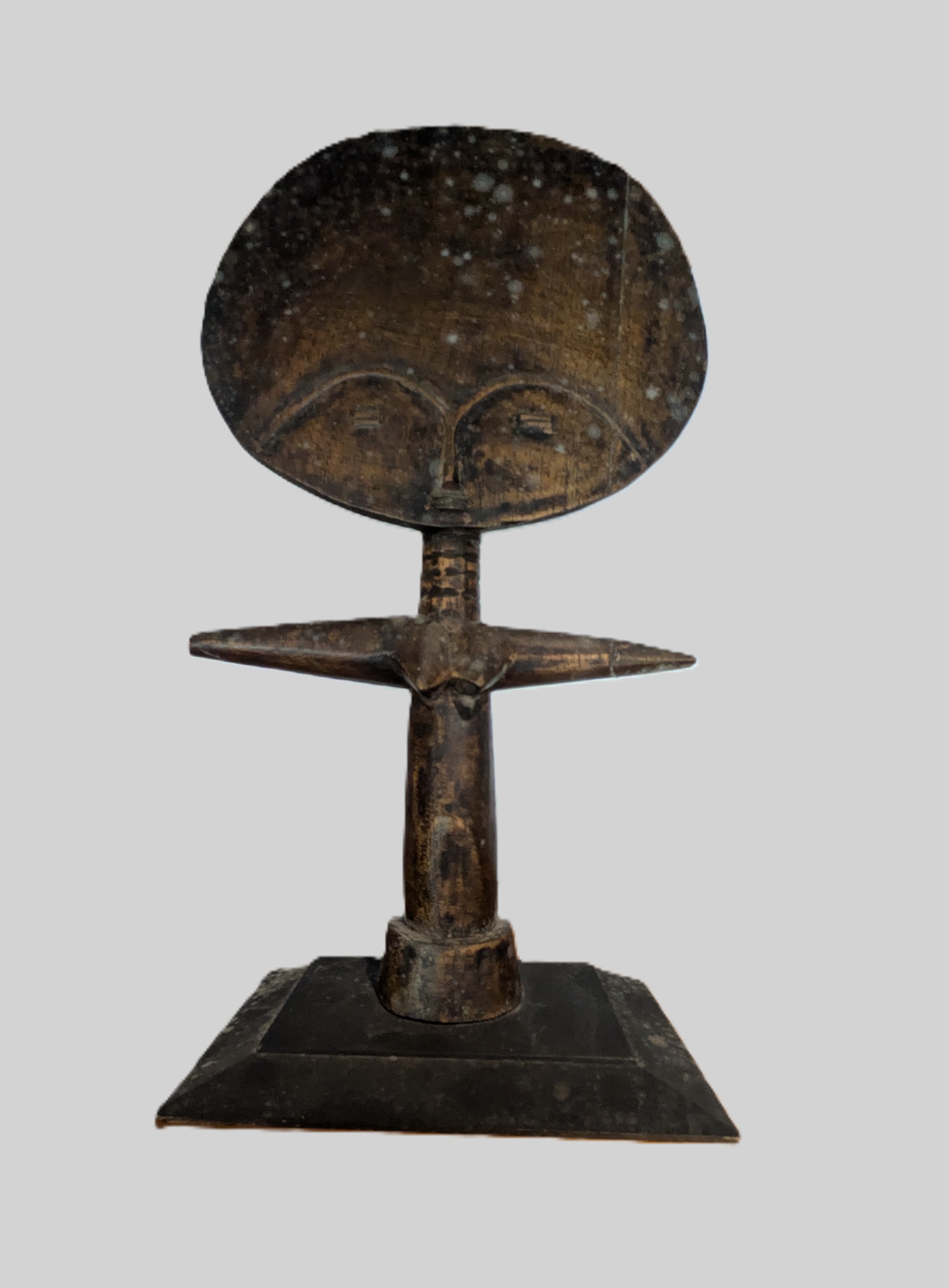
The Ashanti (Ghana) Akuaba Figure illustrates the use of abstraction to convey significant meaning. An akuaba is always female, as historically the Ashanti were matrilineal, so a female child, despite the injustice of girls and women being overlooked throughout history, was the hoped-for child. Her forehead comprises well over half of the discoid-shaped head to indicate this female child has a great destiny. Her skin is smooth, glowing with health and wellbeing. Her neck rings show she is wealthy and her elongated breasts that she has fulfilled her role in her society by becoming a mother. The akuaba is carried around by expected mothers, not as a good luck charm, but as a representation of the hope-filled future for the child.
What other elements of these three works of art (in terms of subject, mood, style, or technique) illustrate any of the concepts of peace, justice, the fair, or the good?
Select Bibliography
Jamie Higgs, Ph.D. Associate Professor of Art History and Curator of the Marian University Permanent Art Collection
Walking to the Hackelmeier Memorial Library
Walk time to be confirmed
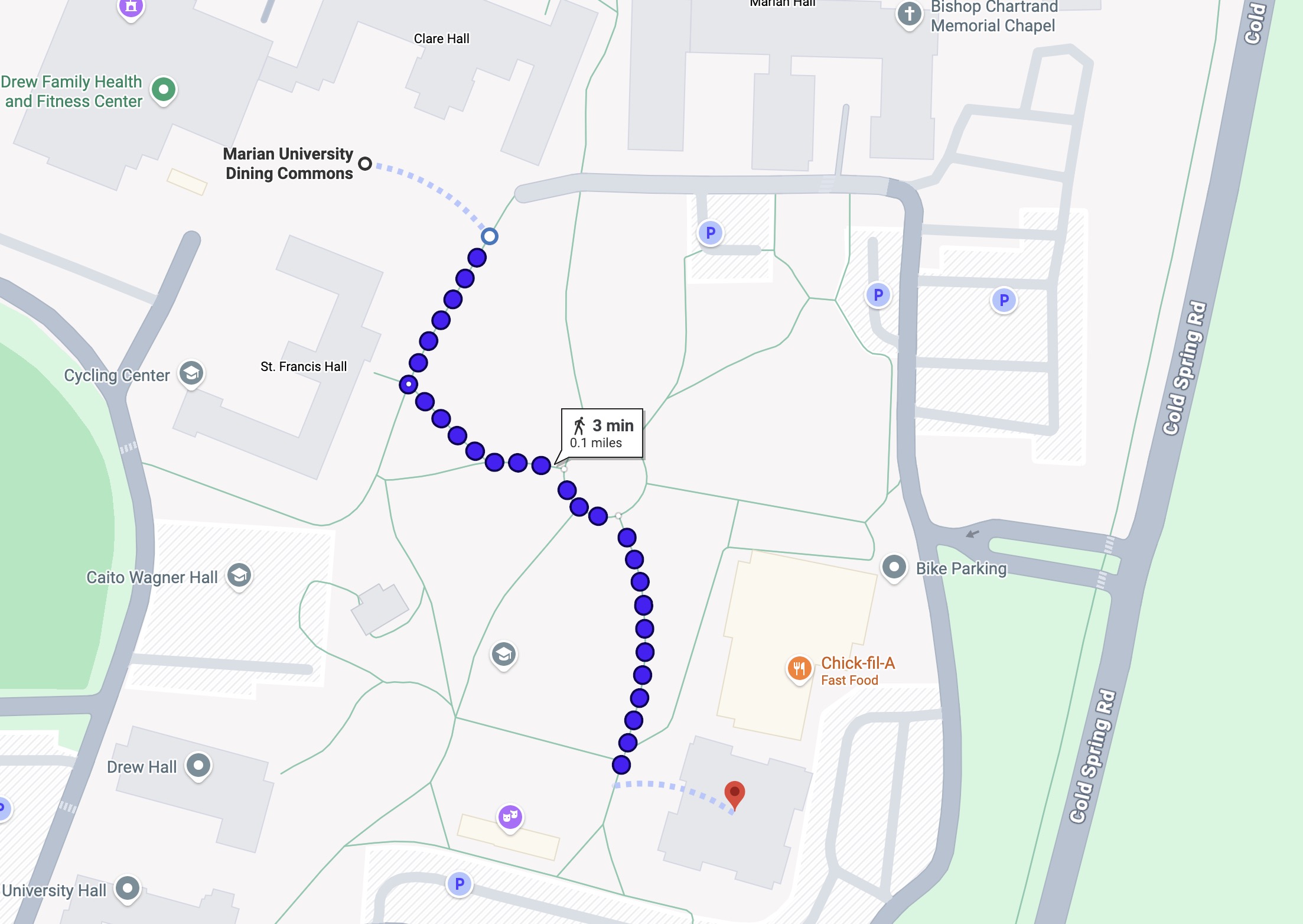
From the Student Dining Commons, make your way to the Hackelmeier Memorial Library.
Consider how art separated by time and place can dialogue around concepts of peace and justice between cultures.
The St. John’s Bible • Just past the stairs on the main floor
The St. John’s Bible
The St. John’s Bible is the result of a collaboration between Donald Jackson, internationally recognized illuminator and calligrapher, and the monks of St. John’s Abbey, Collegeville, Minnesota. Creating the first hand-written, hand-illuminated bible since the Middle Ages was Donald Jackson’s dream from a young age. In 1995, he shared this dream with Eric Hollas, the Director of the Hill Museum & Manuscript Library who in turn shared it with the monks of St. John’s Abbey. With the millennium fast approaching, creating the first hand-worked bible in centuries seemed a fitting tribute to the expansion of Christendom from its first-century historical roots. Bringing together a Committee on Illuminations and Text (CIT), which included historians, theologians, calligraphers, and illuminators, the committee decided this bible would approach the text through an ecumenical lens rooted in Benedictine spirituality. Their grand vision was that this medieval inspired, twenty-first century bible, based on the New Revised Standard Version of biblical exegesis, would have to address issues of the day, incorporate culture, include a broad spectrum of the humanities, raise questions of justice, speak to other faith traditions, and be hospitable to other people of good will. You will find the bible just past the stairs on the main floor. The St. John’s Bible is maintained by the Hackelmeier Memorial Library librarians, and they are happy to locate any of the folios featured on this walk for you — please just ask.
Jackson, © 2002 • The St. John’s Bible, St. John’s University, Collegeville, Minnesota, USA
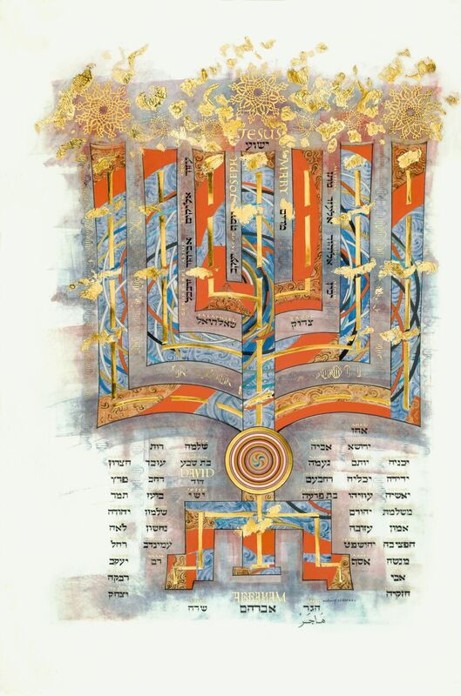
The Genealogy of Jesus from the Gospel Book of Matthew speaks to peace through the shared connection of all seekers of enlightenment by alluding not only to the roots of Christianity in Judaism but to other faith traditions. Jesus’ family tree is represented as a menorah, a symbol most often associated with Judaism, to signify his Jewish ancestry. At the top of the menorah is Jesus’ name, at the bottom is Abraham’s. In between are Jesus’ ancestors, including many of the women in Jesus’ family tree which are often overlooked in the West’s patriarchal leaning historical accounts. Included among the women are Tamar, Bathsheba, Rahab, Ruth, pharaoh’s daughter, and both Sarah and Hagar. Interestingly, Hagar’s name is written in both Hebrew and Arabic. In addition to recognizing Jesus’ rich and full ancestry, the menorah contains mandala patterns from Tibetan Buddhism, arabesque-shaped flames from Islamic art, gilded stamps from Qur’an illuminations, and DNA strands to point to both to the theological teaching that Jesus became man but also to Jesus’ Jewish heredity. With these textual and symbolic connections between all seekers of enlightenment, the CIT and Jackson sought to find peace between prevailing macro world views within the micro space of the page.
Jackson, © 2010 • The St. John’s Bible, St. John’s University, Collegeville, Minnesota, USA
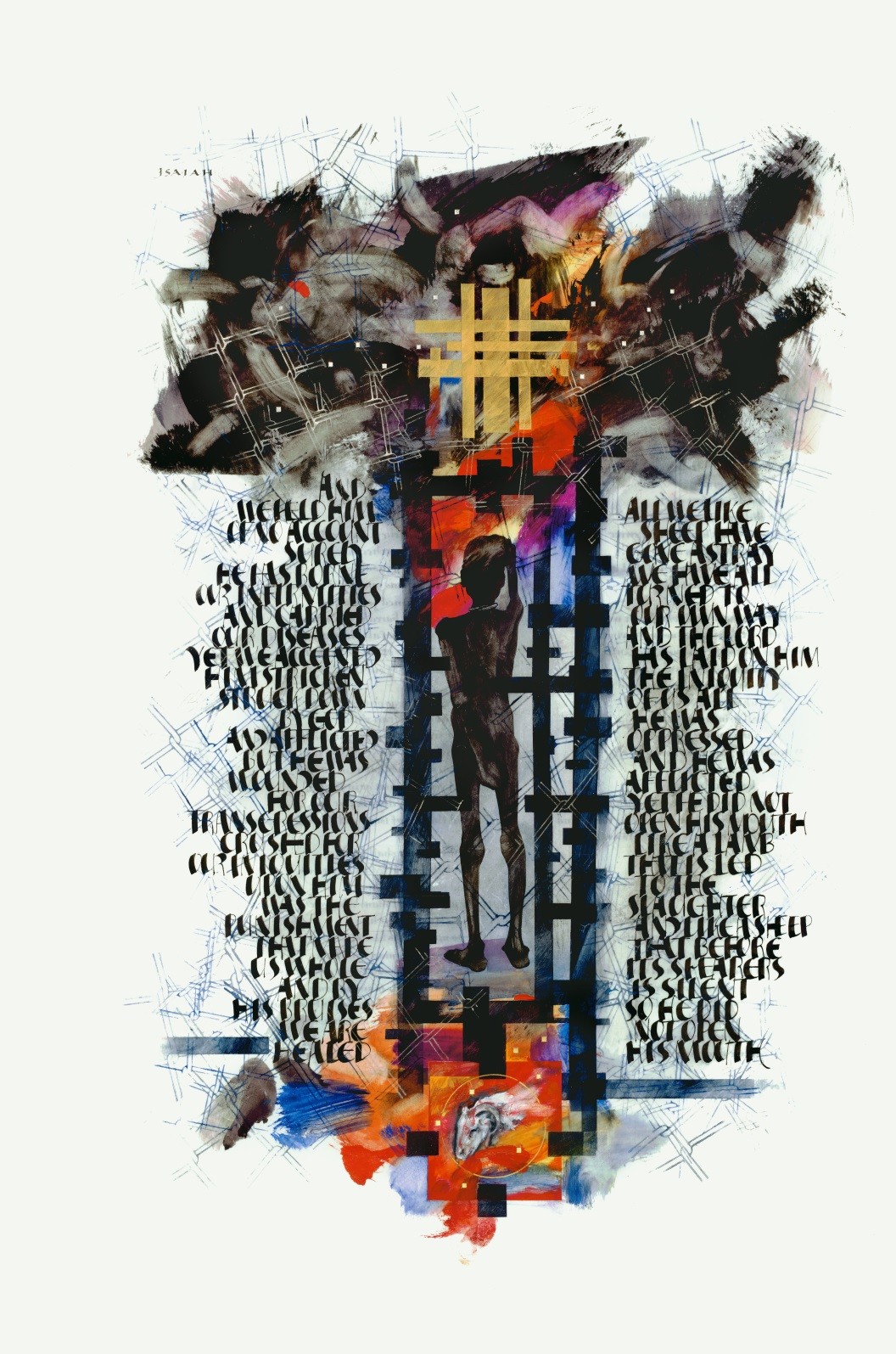
The Suffering Servant from the Book of Isaiah is designed to cause deeper reflection into Isaiah 53: 3-13, which partially reads, “despised and rejected by others; a man of suffering and acquainted with infirmity.” Historically, practitioners of the Jewish faith interpret the suffering servant as Israel, symbolized by the ram’s head at the bottom of the image, while Christians view that statement as a reference to Jesus, symbolized by the gold cross at the top. In this image, between the ram’s head and the gold cross, we see a silhouetted starving African child standing at the Gate of No Return at Elmina Castle in Ghana. That gate was the portal through which enslaved people were forced to board boats for the New World. Therefore, the image encourages the viewer to keep that more recent history in mind, alongside the theological history of the suffering servant, as we reflect on issues of peace and justice operating in our lives and in our communities.
Moore, © 2010 • The St. John’s Bible, St. John’s University, Collegeville, Minnesota, USA
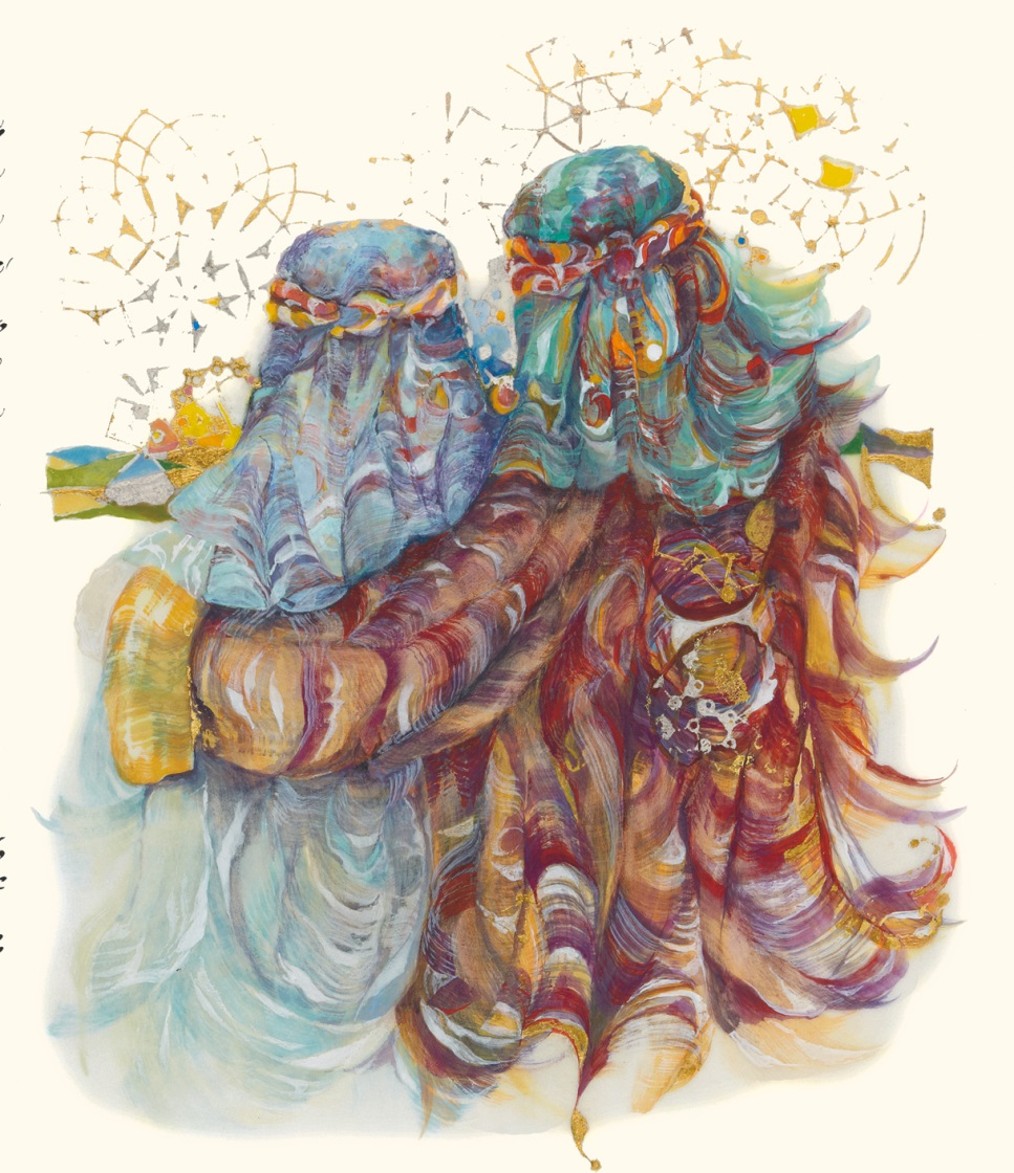
Ruth and Naomi from the Book of Ruth takes us into the world of Ruth, Orpha, and Naomi. Owing to a famine, Naomi, an Israelite from Bethlehem, emigrates from the land of Judah, with her husband and two sons, to the land of Moab. She lived in Moab for about ten years where she experienced the loss of all three men. However, before her two sons passed, they were married to two Moabite women, Ruth and Orpha. With their passing, Naomi instructs her two daughters-in-law to return to their families as the famine had passed in Judah, and Naomi had decided to return home. Ruth powerfully refused stating, “Where you go, I will go. Where you lodge, I will lodge. Your people shall be my people and your God my God. Where you die, I will die—there will be buried” (Ruth 1:16-17). Ruth, a foreigner becomes and Israelite. The wonderful expressive swinging drapery aside, what I love about this image is that it is unclear who among the two women is the immigrant. It is simply an image of care and protection as they look towards God’s plan for their futures, symbolized by the cosmic geometric stamps. It simply does not matter who is the immigrant or who is the foreigner. Rather it is an image of contented peace between two women holding on to one another for support.
What other elements of these three illuminations or other St. John’s Bible illuminations (in terms of subject, mood, style, or technique) illustrate any of the concepts of peace, justice, the fair, or the good?
Selected Bibliography
Jamie Higgs, Ph.D. Associate Professor of Art History and Curator of the Marian University Permanent Art Collection
Walking to the Evans Center
Walk time to be confirmed
From the Hackelmeier Memorial Library, make your way to the Evans Center. Enter from the east doors, turn the corner to your left and use the elevator to make your way to the second floor. Walk from the elevator to the long hall in front of you.

Consider how the St. John’s Bible forges a deep partnership between faith and reason as the foundation to the Franciscan values including peace and justice.
Second-floor permanent art gallery • Enter from the east doors
The Evans Center Collection
The Evans Center Collection includes artwork specifically commissioned for this space (visit Karan Glanders’ Franciscan Values mosaics and Jay Tschetter’s St. Francis and the Leper found on the first floor) but also works created by visiting local, regional, and national artists and our graduating seniors. Located along our second-floor permanent art gallery, these works were acquired through our Talbot Street Visiting Artist Program and through our Senior Purchase Prize respectively. To find the second-floor permanent art gallery enter from the east doors, turn the corner to your left and use the elevator to make your way to the second floor. Walk from the elevator to the long hall in front of you.
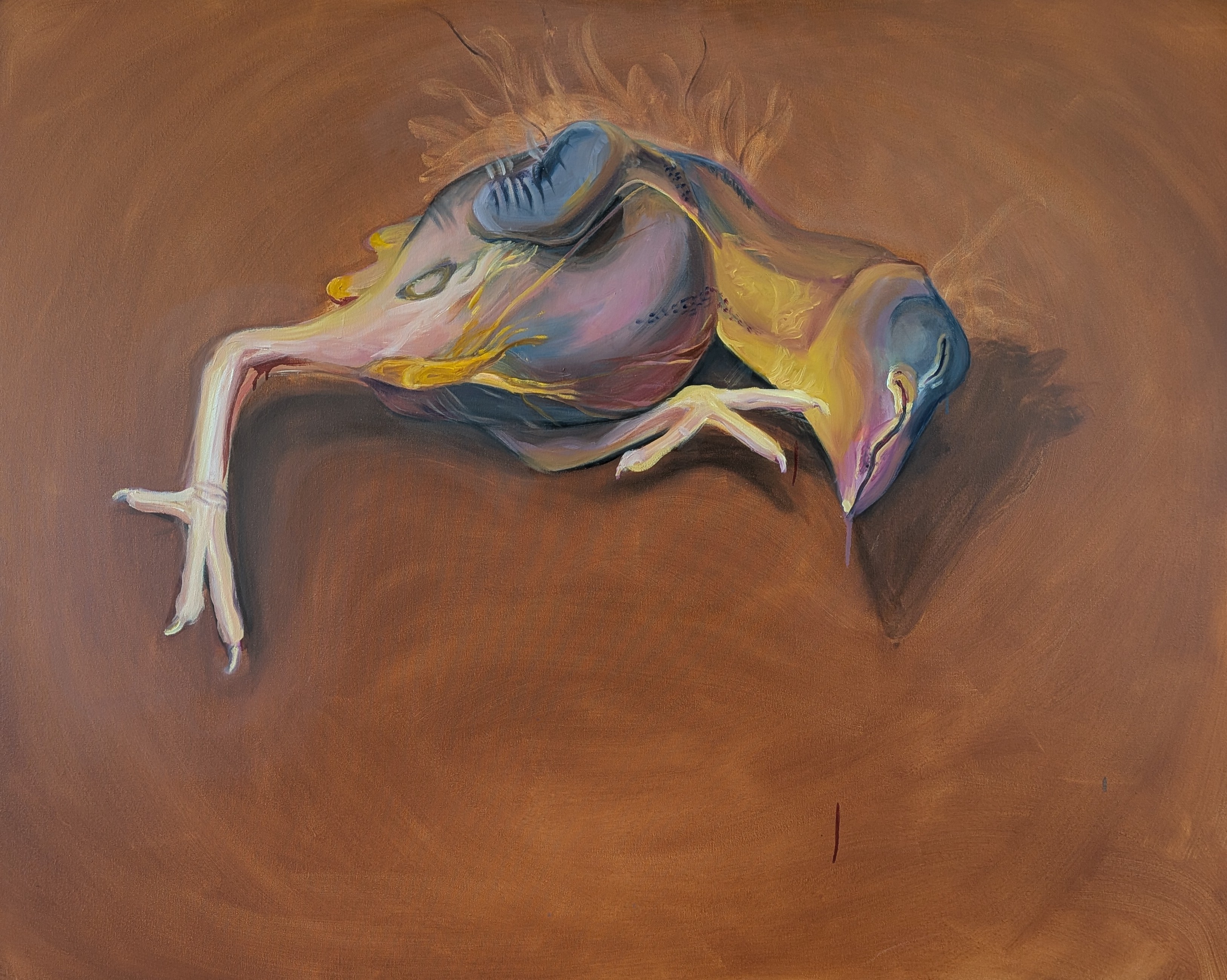
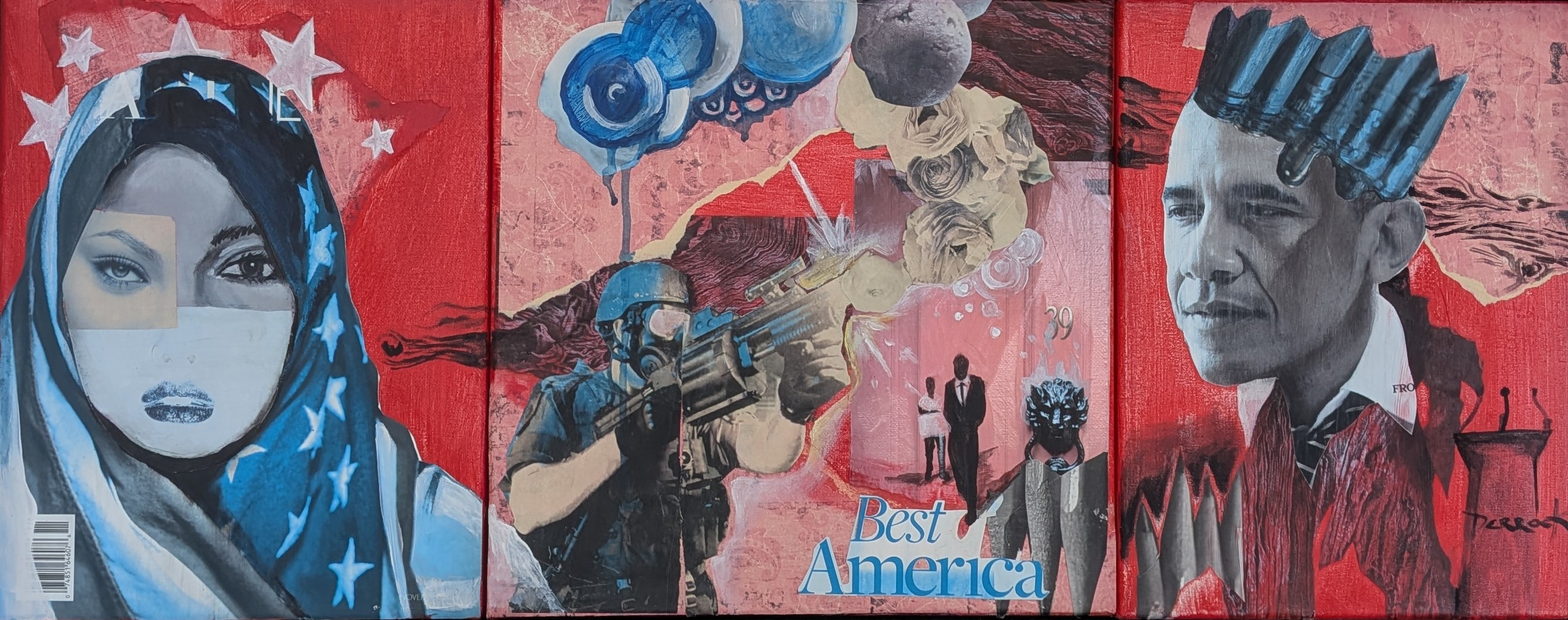
Here I have chosen to highlight works including Jenny Ambroise’s A Significant Death, Peter Hayes’ Untitled, and Derrick Burnett’s Best of America. Each challenges the viewer to think about some aspect of peace and justice. Ambroise’s piece transforms an insignificant death into a monumental presence, reminding the viewer that authentic justice means giving voice to the voiceless. Hayes’ work is a text-based piece created as a powerful commentary on violence in the absence of peace. Finally, Burnett’s work explores race, identity, and society through a hip-hop-based visual language to comment on peace and justice as he asks the viewer to reflect upon his vision of America in Best of America. Does he mean the viewer to read this set of images literally, figuratively, symbolically, or ironically?
Jenny Ambroise
Ambroise’s piece transforms an insignificant death into a monumental presence, reminding the viewer that authentic justice means giving voice to the voiceless.

Peter Hayes • Acrylic • Senior Purchase Prize (Class of 2014)
Hayes’ work is a text-based piece created as a powerful commentary on violence in the absence of peace. Strewn across a bullet-riddled canvas are hand-written statistics related to gun violence.
Derrick Burnett • Mixed media canvas triptych • Talbot Street Visiting Artist Series (2015)
Burnett’s work explores race, identity, and society through a hip-hop-based visual language, asking the viewer to reflect upon his vision of America in Best of America. Does he mean the viewer to read this set of images literally, figuratively, symbolically, or ironically?
What other elements of these works of art (in terms of subject, mood, style, or technique) illustrate any of the concepts of peace, justice, the fair, or the good? Are there additional works in this collection you can relate to the Franciscan value of peace and justice?
Jamie Higgs, Ph.D. Associate Professor of Art History and Curator of the Marian University Permanent Art Collection
Walking to the Tea Garden
Final stop • Walk time to be confirmed
From the Evans Center, make your way to the Marian University Tea Garden.
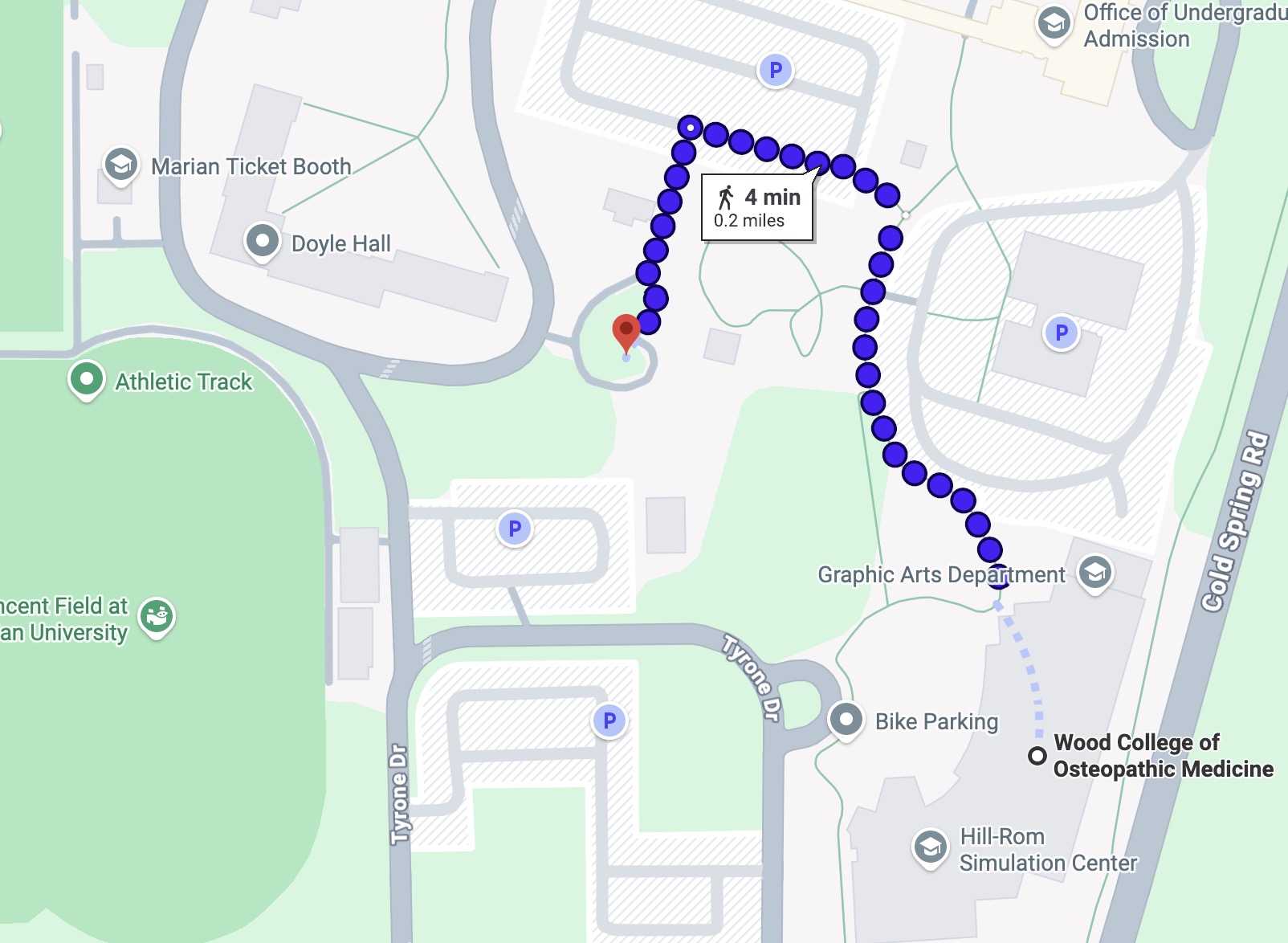
Reflect on the artists you have encountered today and how, from differing perspectives, they challenge viewers to think critically about the concepts of peace, justice, the fair, and the good.

We will finish today’s Art Walk | Art Talk in the Marian University Tea Garden. Our Tea Garden dates to the time of the Stokely Mansion. The mansion was built in 1912 by automotive industrialist and sports promoter Frank H. Wheeler; he was a partner, along with James Allison and Carl Fisher, in the Indianapolis Motor Speedway. The architect William Price of Price and McLanahan, out of Philadelphia, designed the Mediterranean-looking mansion, two small homes for gardeners and servants, a 320’ covered colonnade leading to a heated seven-car garage, a four-story water tower, a manmade lake complete with an island and a Venetian gondola, a gazebo, and this Japanese teahouse. The context for our tea garden, within the larger cultural history of landscape design, falls under the invention of the historic past, meaning a desire to connect with chronologies and locales no longer accessible so the wealthy created the sense of place in their own gardens. However, the authentic Japanese history of the tea house and garden relates very directly to our Franciscan value of peace and justice, specifically to harmony, respect, and tranquility.
How does Marian University’s Tea House and Garden illustrate any of the concepts of peace, justice, the fair, or the good?
Jamie Higgs, Ph.D. Associate Professor of Art History and Curator of the Marian University Permanent Art Collection
Thank you for walking with us.
Thank you for joining me on one of our Franciscan Values Art Walks | Art Talks. If you would like to take another walk, you can return to the Art Walks | Art Talks home page.
For more information about the Marian University Permanent Art Collection, contact Jamie Higgs, Ph.D., Associate Professor of Art History and Curator of the Marian University Permanent Art Collection at jhiggs@marian.edu or (317) 955-6432.