Funding supports research into antibiotic resistance, lead exposure from children's clothing, plant genetics, and opportunities for undergraduate scientists.
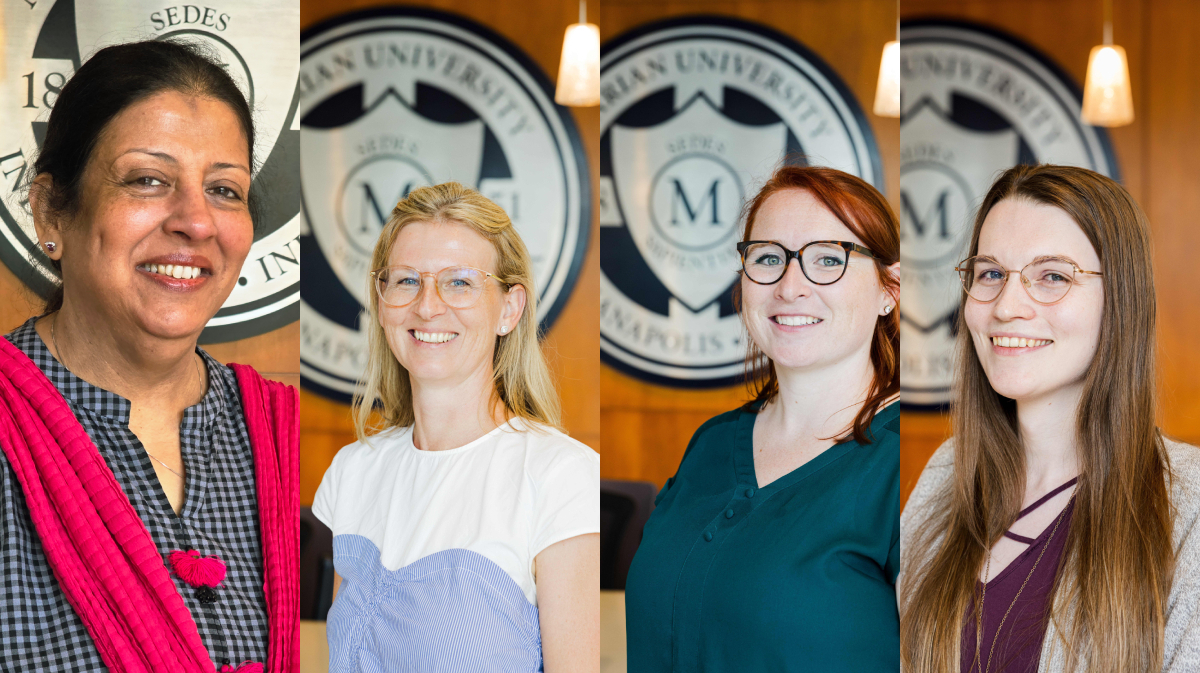
Four Marian University researchers have received grants from the Indiana Academy of Science to investigate antibiotic resistance in central Indiana waterways, potential lead exposure from children's clothing, and the genetics of North American azaleas, while helping undergraduate students share their scientific discoveries.
Samina Akbar, Ph.D.; Sarah Justice, Ph.D.; and Kamila Deavers, Ph.D., received Senior Research Grants through the Academy's Fall 2026 Grant Programs. Saoirse Foley, Ph.D., received a Dr. Delores G. Brown Grant supporting undergraduate scientific communication and conference presentations.
The awards will help advance research across multiple scientific disciplines while providing opportunities for Marian students to participate in scientific discovery.
Investigating how antibiotic resistance could spread
Akbar, of Marian University's Tom and Julie Wood College of Osteopathic Medicine, received funding to investigate the genes responsible for antibiotic resistance in bacteria collected from central Indiana reservoirs.
Previous Marian research identified bacteria resistant to multiple antibiotics in Indianapolis waterways, including Eagle Creek Reservoir. The new grant will fund DNA sequencing of plasmids, small pieces of genetic material that can carry antibiotic resistance genes and sometimes move between bacteria.
Identifying those genes and their locations could help researchers determine whether waterways might contribute to the spread of antibiotic resistance, including to bacteria capable of causing human infections.
“Up to now we could show that these bacteria resist antibiotics. With this funding, we can identify the specific genes responsible and judge whether they're likely to spread,” Akbar said.
The research will also give students hands-on experience with modern genomic tools.
Read more about Marian's antibiotic resistance research.
Developing better tests for lead exposure from children's clothing
Deavers, of Marian University's Department of Chemistry, received a $5,000 Senior Research Grant to develop and validate more reliable methods for measuring potential lead exposure from children's clothing.
Deavers and Marian undergraduate researchers previously identified elevated lead levels in children's fast-fashion clothing. The team is now testing a new collection of children's shirts using improved laboratory methods that simulate saliva exposure when children chew on fabrics and the conditions encountered during digestion.
The research addresses a gap in existing testing procedures, many of which were developed for soil or toys rather than textiles.
“Children chew on their clothing every day, yet we still don’t have reliable methods to measure how much lead they could be exposed to that way. This next phase is about building that scientific foundation,” Deavers said.
The goal is to establish validated testing procedures other laboratories can use to better understand potential exposure. More reliable data could eventually help regulators evaluate whether stronger testing requirements are needed for children's clothing.
Read more about Marian's research into lead in children's clothing.
Exploring the genetics of North American azaleas
Justice, of Marian University's Department of Biology, received a Senior Research Grant to sequence the genomes of North American azaleas through a collaboration with Taylor University.
The project will involve Marian undergraduate students in genomic research, providing hands-on experience studying plant genetic information and contributing to a collaborative scientific investigation.
Helping undergraduate researchers share their discoveries
Foley, of Marian University's Department of Biology, received a Dr. Delores G. Brown Grant for a project titled From Discovery to Scientific Community: Supporting Indiana Undergraduate Researchers in Communicating Science.
The grant will support three Marian undergraduate researchers as they develop their scientific communication skills and prepare to present their work at the 2027 Indiana Academy of Science Annual Meeting and the American Arachnological Society Annual Meeting.
The project will help students gain experience communicating scientific findings and engaging with the broader research community.
Supporting scientific discovery in Indiana
Founded in 1885, the Indiana Academy of Science is the state's oldest multidisciplinary scientific organization. Its grant programs have supported 1,270 research projects and awarded more than $1.7 million since 1940.
The four Marian University awards reflect research and student development efforts spanning public health, environmental science, plant genetics, and scientific communication.