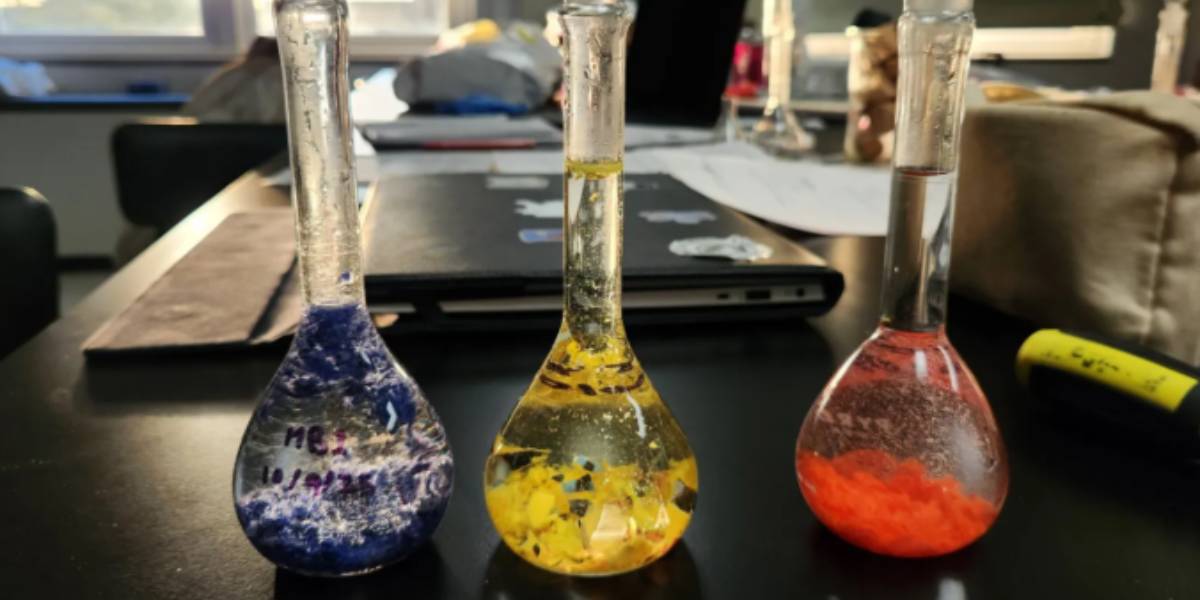
 As we first reported in March, undergraduate researchers at Marian University discovered that some children’s fast-fashion clothing contains unsafe levels of lead, with brightly colored fabrics, including red and yellow shirts, releasing the highest amounts in laboratory testing.
The research, led by Kamila Deavers, Ph.D., an associate professor of chemistry at Marian University, began after her daughter briefly had elevated blood lead levels caused by coatings on a toy. Since then, Deavers’ laboratory has focused on identifying everyday sources of heavy-metal exposure and sharing those findings with the community.
“I started to see many articles about lead in clothing from fast fashion,” said Deavers. “And I realized not too many parents knew about the issue.”
Students Cristina Avello and Priscila Espinoza, both pre-med majors, tested 11 shirts purchased from various retailers. All exceeded the current U.S. federal lead limit for children’s products. Simulated stomach-digestion experiments also suggest that even brief chewing of these fabrics could expose children to potentially dangerous levels of lead.
“Children are most at risk because they often put clothing in their mouths,” said Avello. “Our goal is to help parents make informed choices and raise awareness of a hidden hazard.”
The team plans to expand its testing, examine how laundering affects lead content, and explore safer alternatives for dyeing fabrics. The research was funded through internal grants from Marian University and Sigma Zeta, and the findings were presented at the American Chemical Society Spring 2026 meeting.
"Our research isn't about brands; it's about children's exposure to harmful contaminants," said Dr. Deavers. "The bigger challenge is understanding how lead gets into textiles and measuring the actual risk of exposure so we can encourage safer products and manufacturing practices."
Since the research’s initial release in March, the findings have drawn significant international attention and sparked broader conversations about heavy metals in fast-fashion products. Deavers’ work has been covered by media outlets around the world, including a recent interview with Australia's ABC News, underscoring the growing global interest in consumer product safety and childhood lead exposure.
In her latest interview, Dr. Deavers discusses the research with ABC News Australia here